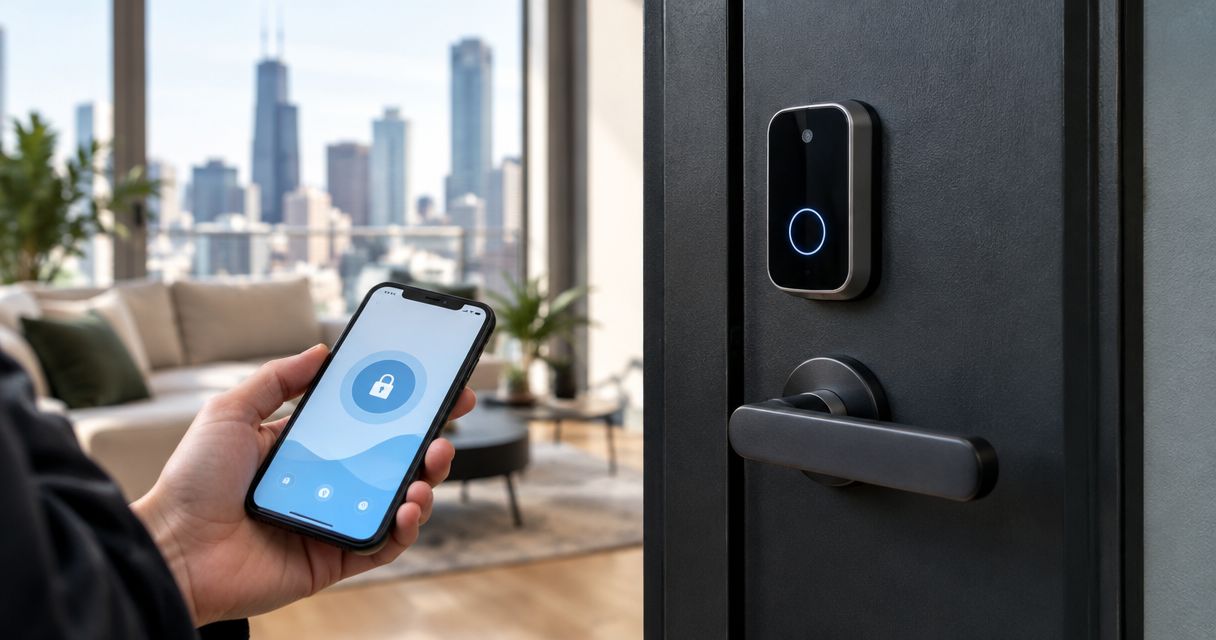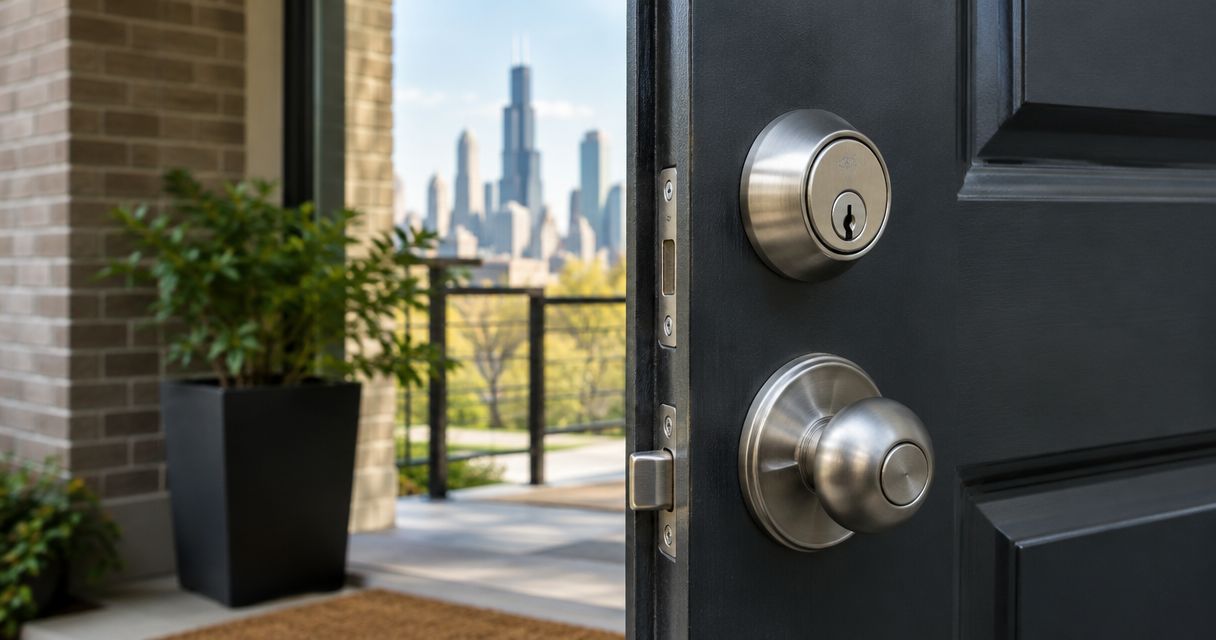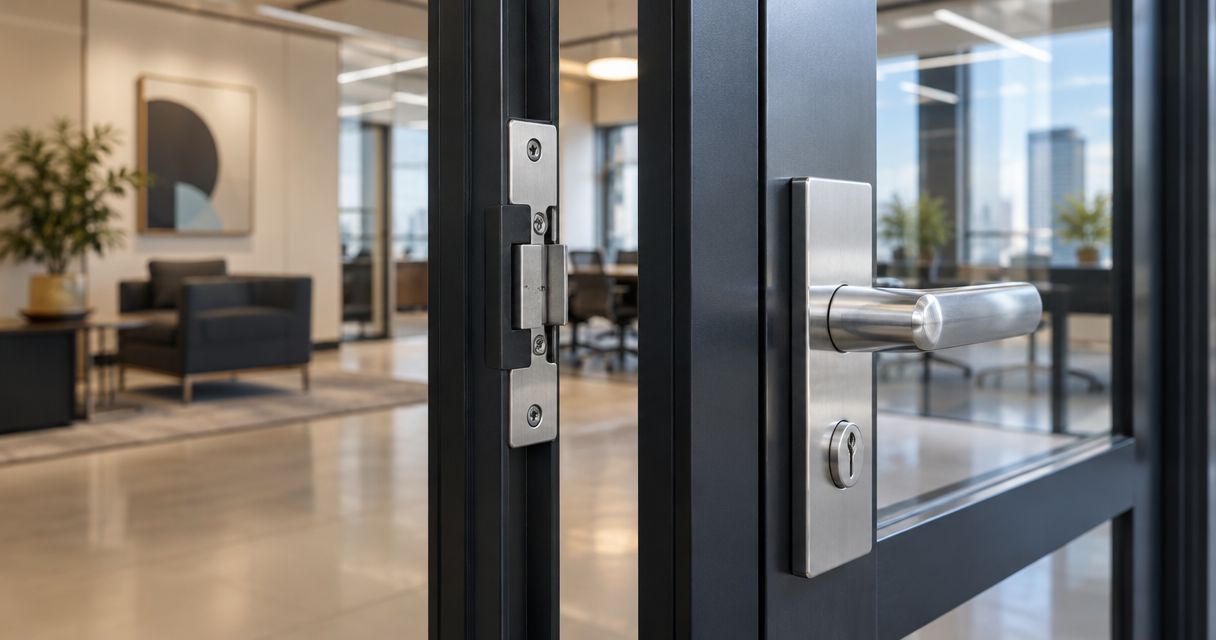
Best overall for a standard office latch: a compatible cylindrical-lock electric strike. Best for a rim panic bar: a rim-exit electric strike. Best for an existing mortise lock: a compatible mortise-lock strike. The best electric strike for commercial door projects in Chicago in 2026 is the one that matches the door’s hardware, fire rating, and required exit operation—not the one with the longest feature list.
- Choose an electric strike for commercial door hardware compatibility before comparing features.
- Cylindrical-lock strikes suit standard office latches; rim-exit strikes serve compatible panic bars.
- Mortise-lock strikes require careful checks of latch, deadlatch, and deadbolt operation.
- Omegalocksmith provides commercial door and access control services in Chicago and surrounding Cook and DuPage counties.
Why this matters: the frame is only half the job
An electric strike replaces the frame-side strike and releases a compatible latch when access is authorized. It does not automatically make the door lock, close, or exit correctly. A sagging door or poorly adjusted closer still needs attention.
Omegalocksmith is best for Chicago businesses seeking commercial door and access control service rather than a product-only purchase. Start with the available locksmith services if you need the opening assessed before choosing hardware.
For a 2026 commercial door project, separate controlled entry from safe exit. Releasing the outside latch and allowing occupants to leave are different functions; the complete opening must satisfy both.
What makes the best commercial electric strike?
Judge each candidate against these criteria before ordering:
- Lock compatibility: Match the strike to a cylindrical latch, mortise lock, or rim exit device. Similar-looking latches do not establish compatibility.
- Opening requirements: Confirm whether the door assembly is fire-rated and what hardware configuration its listing permits.
- Power-loss behavior: Specify fail-secure or fail-safe operation deliberately. Do not confuse outside access with inside egress.
- Frame preparation: Check frame material, available space, existing cutout, and the manufacturer’s installation template.
- Electrical compatibility: Verify supply voltage, current demand, duty rating, controller output, and wiring requirements.
- Door condition: Confirm that the door closes and latches without pushing, pulling, or lifting it into position.
A strike that fails any required check is not a suitable alternative. Extra monitoring features do not compensate for an incompatible latch or an unauthorized frame modification.
Commercial electric strikes at a glance
These are ranked hardware configurations, not model endorsements. The order gives a starting point for a typical office opening; your existing lock determines the correct branch.
| Configuration | Best for | Standout feature | Key limitation |
|---|---|---|---|
| Cylindrical-lock electric strike | Office doors with compatible cylindrical latches | Electrifies latch release while retaining compatible lock hardware | Does not suit every latch or frame preparation |
| Rim-exit electric strike | Doors with compatible rim panic hardware | Releases the rim latch at the frame | Does not automatically fit vertical-rod exit devices |
| Mortise-lock electric strike | Openings retaining a compatible mortise lock | Accommodates the specified mortise latch arrangement | Deadlatch and deadbolt details complicate selection |
Do not read the ranking as a reason to replace a working mortise lock with a cylindrical lock. The correct hardware family outranks its position in this table. For your 2026 shortlist, eliminate incompatible configurations first and compare individual models second.
1. Cylindrical-lock strike: best for standard office latches
A cylindrical-lock electric strike works with a compatible latch projecting from the edge of the door. When authorized, the strike’s keeper releases so the latch can pass without turning the outside handle.
This is the default configuration to investigate for an office door that already uses a cylindrical lock. The exact latch dimensions, deadlatching arrangement, frame, and required listing still control the selection.
Cylindrical-lock strike pros:
- Retains compatible cylindrical lock hardware rather than requiring a different lock family.
- Places electrical release at the frame-side latch interface.
- Supports controlled entry when paired with suitable access control equipment.
Cylindrical-lock strike cons:
- Existing frame preparation does not guarantee a direct replacement fit.
- Latch pressure from a misaligned door can interfere with release.
- An exterior opening needs appropriate environmental ratings, not merely the correct latch shape.
Best for: Office and staff doors with compatible cylindrical latches and a suitable frame.
Before selecting a model, photograph the door edge and the frame strike area. Record the lock manufacturer and model where identifiable. A photograph of the outside lever alone does not show enough of the locking interface.
Verdict: Buy this configuration only after confirming the latch, frame preparation, electrical requirements, and opening rating.
2. Rim-exit strike: best for compatible panic-bar doors
A rim-exit electric strike releases the frame-side latch of a compatible rim exit device. The push bar remains part of the exit hardware; the strike controls the latch interface at the frame.
The word panic is not enough to identify the correct strike. Rim devices and vertical-rod devices secure doors differently, so a strike intended for one arrangement is not a universal exit-device solution.
Rim-exit strike pros:
- Allows controlled outside entry while retaining compatible rim exit hardware.
- Matches the frame-side latch arrangement used by a rim device.
- Keeps selection focused on the existing exit system rather than treating it as an office lock.
Rim-exit strike cons:
- Does not automatically work with concealed or surface vertical-rod devices.
- Requires checks of device compatibility, door clearance, and installation geometry.
- Fire-rated exit openings require a permitted, listed hardware combination.
Best for: Commercial doors with compatible rim panic hardware where the opening’s requirements permit the proposed strike.
Ask the installer to identify the exit device before proposing a strike. Also check how occupants exit with the access controller disconnected; a card-reader demonstration alone does not prove correct exit operation.
Verdict: Buy for a verified rim-device application; skip it as a generic solution for every panic-bar door.
3. Mortise-lock strike: best for retaining mortise hardware
A mortise lock sits in a pocket within the door and can combine several locking functions. Its electric strike must accommodate the specific latch arrangement and preserve the lock’s intended operation.
The deadlatch and any deadbolt deserve separate attention. Releasing a latch does not retract a separately thrown deadbolt, so the access control sequence must account for how the lock is actually used.
Mortise-lock strike pros:
- Retains a compatible mortise lock instead of assuming the entire lock must change.
- Provides controlled latch release when the lock and strike are properly matched.
- Supports a hardware-specific solution for an existing commercial opening.
Mortise-lock strike cons:
- Latch, deadlatch, and deadbolt relationships require detailed compatibility checks.
- Strike-pocket depth and frame preparation can restrict the choices.
- A separately engaged deadbolt can prevent entry despite an access authorization.
Best for: Doors with identified mortise locks that the business intends to retain.
Get the lock’s function and model, not just its brand. Explain whether staff use a key, thumbturn, or other control to engage additional locking functions, because that changes what an authorized access signal accomplishes.
Verdict: Hold the purchase until the complete mortise-lock function and strike compatibility are confirmed.
Choose the power-loss behavior deliberately
Fail-secure and fail-safe describe what happens to the strike’s locking state when its power is removed. Neither term, by itself, describes every aspect of the door’s exit operation.
| Power-loss behavior | What happens at the strike | Best for | Limitation |
|---|---|---|---|
| Fail-secure | The strike stays secure when power is lost | Openings whose approved design requires the strike to remain secured | Power loss does not provide outside entry through the strike |
| Fail-safe | The strike releases when power is lost | Openings whose approved design requires release on power loss | Loss of strike power also removes that point of entry control |
Do not choose fail-safe simply because its name sounds safer. Fire-door latching, required egress, access control behavior, and any required release interfaces must be evaluated together.
For a 2026 access control upgrade, document the intended power-loss state in the hardware schedule. Then test it at the completed opening rather than relying on a controller setting or a label on the box.
Check the opening before ordering
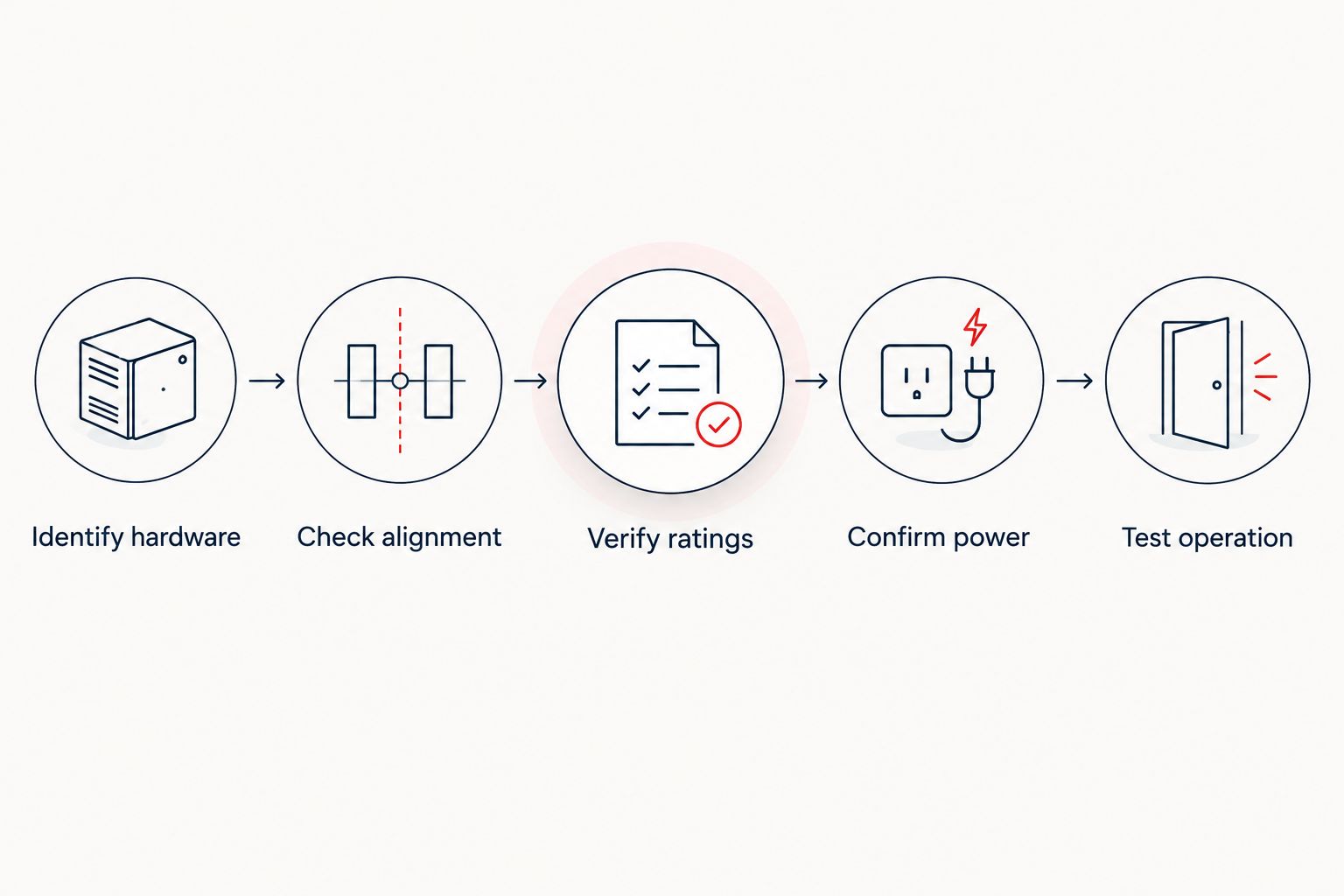
Use this sequence to narrow the selection without guessing at a model:
- Identify hardware: Record the lock or exit-device model and inspect the latch interface.
- Check alignment: Confirm that the door closes fully and latches without manual pressure.
- Verify ratings: Establish fire-rating and environmental requirements for the complete installation.
- Confirm power: Match the strike’s electrical requirements to the supply and controller.
- Test operation: Verify authorized entry, denied entry, normal exit, and power-loss behavior.
The sequence matters. Ordering a strike before identifying the latch leaves the most basic compatibility question unanswered.
Electrical ratings need an exact match. A strike specified for 12 V DC is not interchangeable with one specified for 24 V DC unless the manufacturer explicitly supports both configurations. Also verify current demand and whether the chosen operating mode permits continuous energization.
Omegalocksmith provides commercial door and access control services alongside residential locks and car-key services. For a commercial inquiry, describe the existing hardware and the access problem rather than requesting an unspecified electric strike.
Discuss your commercial door
Describe the lock, frame, and access problem for your Chicago-area commercial opening.
Chicago exterior doors need another compatibility check
An exterior commercial opening adds exposure to the hardware decision. Confirm that the proposed strike is rated for the installation’s actual environment, including moisture and temperature conditions.
An enclosed vestibule and a directly exposed entrance are different applications. Do not treat a weather rating as permission to ignore the manufacturer’s mounting instructions, wiring protection, or permitted orientation.
For a Chicago project in 2026, inspect the door’s closing and latching behavior before blaming the access system. Wind pressure, door alignment, and closer adjustment belong in the diagnosis; increasing electrical power is not a repair for a binding latch.
How these configurations are ranked
The ranking starts with hardware compatibility, then considers the opening’s requirements, frame preparation, power behavior, and door condition. Cylindrical-lock strikes appear first as the starting branch for standard office latches—not as a universal winner.
Rim-exit and mortise-lock strikes serve different hardware families. This guide does not assign model scores or claim comparative testing; the useful decision is identifying which configuration belongs on your door before comparing manufacturer documentation.
Which commercial electric strike should you choose?
Choose a compatible cylindrical-lock strike for a standard office latch, a rim-exit strike for compatible rim panic hardware, and a mortise-lock strike for an identified mortise lock. Do not substitute one family because another appears easier to order.
For an undecided Chicago business, the next move is an opening assessment, not a broader shopping list. Omegalocksmith serves commercial door and access control customers in Chicago and surrounding Cook and DuPage counties; identify your existing hardware and required entry behavior before requesting a recommendation.
FAQ
What's the best electric strike for commercial door access control?
The best electric strike for commercial door access control is one compatible with the existing lock, frame, opening rating, and required power-loss behavior. Start by identifying whether the door uses a cylindrical latch, mortise lock, or rim exit device.
Can an electric strike work with a panic bar?
An electric strike can work with a compatible rim panic device. Do not assume the same strike works with vertical-rod hardware; verify the exact exit-device model and the permitted installation.
Is fail-safe better than fail-secure for a business door?
Neither power-loss behavior is universally better. Select the behavior required by the approved opening design, while checking fire-door latching, inside egress, and any required release interfaces separately.
Will an electric strike fix a door that does not latch?
An electric strike does not fix door alignment or closer problems. Repair the mechanical closing and latching problem before commissioning the access control release.
Can I use an electric strike on a fire-rated door?
An electric strike belongs on a fire-rated opening only when the hardware combination and installation are permitted for that assembly. Verify the applicable listings and preparation requirements before cutting the frame.
Does a commercial electric strike use 12 V or 24 V?
Commercial electric strikes are available with different electrical requirements, including 12 V DC and 24 V DC configurations. Use the exact voltage, current capacity, and wiring arrangement specified for the selected model.
Who can help choose an electric strike in Chicago?
Omegalocksmith provides commercial door and access control services in Chicago and surrounding Cook and DuPage counties. Provide the door location, existing lock or exit-device details, and the entry problem when requesting help.
One last thing
A valid access credential is not proof that the door opened—or secured afterward. During handover, operate the actual door: authorize entry, open it, let it close, and verify that it latches again. Repeat the relevant checks under the specified power-loss condition before accepting the installation.