Best overall starting point: key-first diagnosis by a qualified automotive locksmith. Best for power or wiring faults: an automotive electrical specialist. Best for vehicle-specific authorization procedures: a dealership. Best for a confirmed internal module fault: an electronics repair specialist. This 2026 car immobilizer repair guide ranks routes by avoidable handoffs, not promised completion times; Omegalocksmith provides 24/7 car-key services in Chicago and surrounding Cook and DuPage counties.
- Start car immobilizer repair with key recognition, vehicle power and fault diagnosis—not an automatic module replacement.
- Omegalocksmith provides Chicago car-key services; confirm vehicle coverage and diagnostic scope before booking.
- Choose an automotive electrical specialist when testing identifies power, wiring or communication faults.
- Use dealership service for required vehicle-specific procedures; reserve module repair for a confirmed internal fault.
Why the repair route matters
An immobilizer prevents an engine from running without an authorized key. A no-start condition does not, by itself, prove that the immobilizer has failed. Battery problems, starter faults and other engine-management issues also need consideration.
The shortest repair route depends on identifying the failed part before arranging transport, ordering components or sending electronics away. A security warning is a diagnostic clue, not permission to replace a module.
For a 2026 booking, ask what the provider can diagnose on your exact vehicle. General key-cutting capability does not establish support for every immobilizer system, and a dealership appointment does not establish that replacement parts are already on hand.
What makes the best car immobilizer repair option?
Judge each route against these criteria before choosing where the vehicle goes:
- Fault fit: The provider should distinguish a key problem from a vehicle-side electrical or module problem.
- Vehicle coverage: Confirm the make, model, model year and key type before booking.
- On-site capability: Ask whether diagnosis and any supported key work happen where the vehicle sits.
- Repair continuity: Establish who handles programming, installation and final testing if another provider becomes involved.
- Completion evidence: Require a successful starting test and a clear explanation of any remaining faults.
These criteria matter more than an advertised speed claim. A provider who cannot perform the next required step introduces another appointment, even when the first visit happens promptly.
Car immobilizer repair options at a glance
The order below prioritizes a practical diagnostic starting point, then increasingly specialized routes. It is not a measured turnaround leaderboard: once testing identifies the fault, the matching specialist takes priority over the list position.
| Rank and option | Best for | Standout feature | Main turnaround dependency | Key limitation |
|---|---|---|---|---|
| 1. Key-first automotive locksmith diagnosis | Lost, damaged or unrecognized keys | Tests whether the key is the problem before escalating | Vehicle coverage and supported programming | Does not resolve every vehicle-side fault |
| 2. Automotive electrical diagnosis | Power, wiring or communication faults | Tests the circuits supporting key authorization | Access to the vehicle and fault tracing | Requires suitable vehicle-specific equipment |
| 3. Dealership diagnosis and programming | Required manufacturer-specific procedures | Access to the brand's service workflow | Appointment, authorization and parts requirements | Vehicle transport adds a separate step when needed |
| 4. Electronics module repair | Confirmed internal control-unit damage | Addresses a diagnosed electronic fault | Removal, repair, return and installation | Repair alone does not establish vehicle operation |
1. Key-first diagnosis: best for lost or unrecognized keys
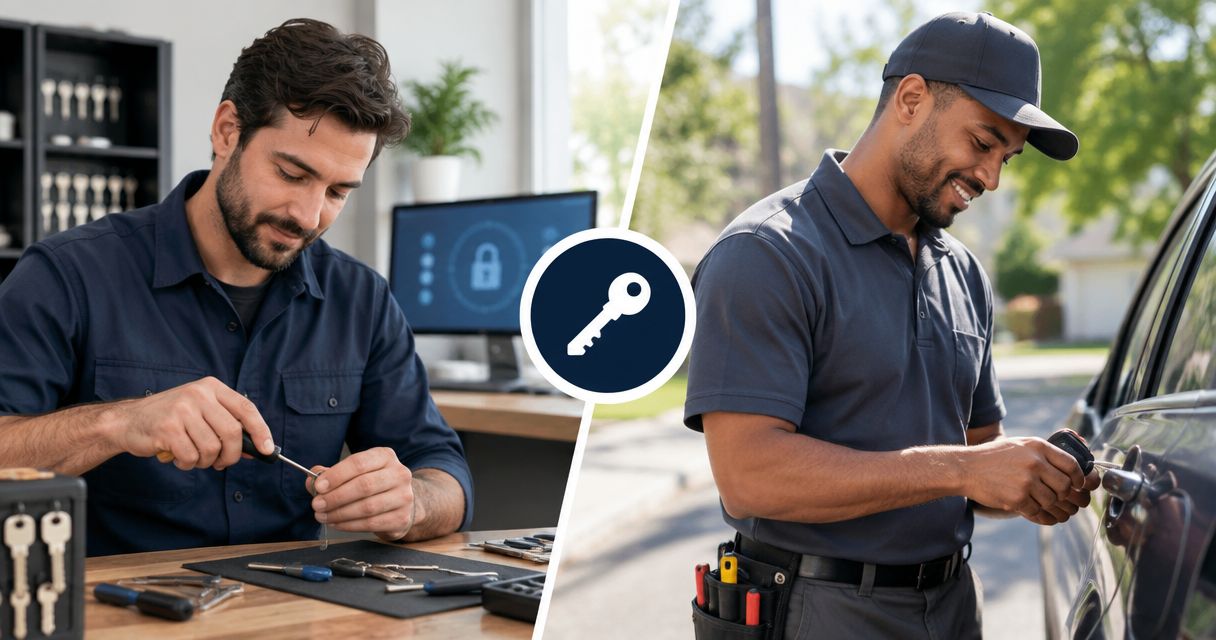
A qualified automotive locksmith can investigate whether an authorized key is present and recognized, within the provider's vehicle coverage. This route fits a lost key, a damaged transponder key or a vehicle that starts with one key but not another.
Start with the symptom, not a requested replacement part. Describe whether the key turns, whether the engine cranks and whether a security indicator behaves differently from normal. Bring every available key so the technician can compare their behavior.
Key-first diagnosis pros:
- Keeps key cutting and supported programming within the same service route.
- Provides a direct starting point when another authorized key still starts the vehicle.
- Avoids treating a missing key as evidence of a failed control unit.
Key-first diagnosis cons:
- Coverage differs by vehicle and security system.
- Key programming does not repair damaged wiring or a failed vehicle-side module.
Omegalocksmith's locksmith services include car-key work. Confirm your vehicle details, the no-start symptoms and the scope of the appointment rather than assuming every immobilizer repair is included.
Best for: Drivers whose problem began with a lost, damaged or unrecognized key.
Verdict: Buy the diagnostic visit when the symptoms point to the key; hold off on module replacement.
2. Electrical diagnosis: best for power or communication faults
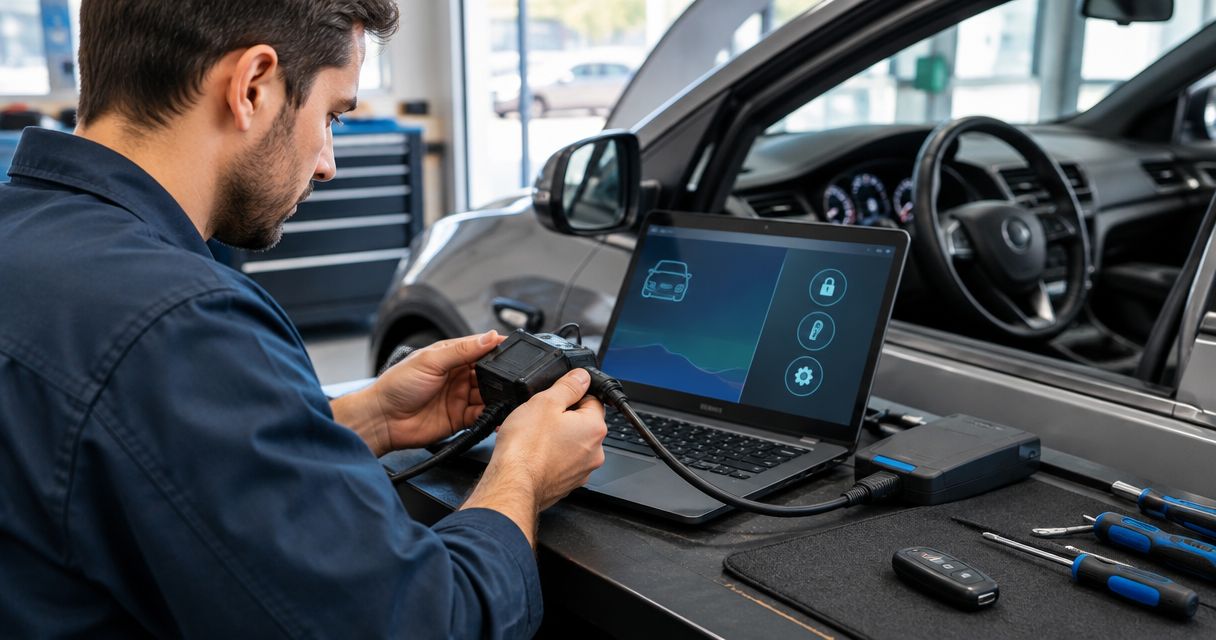
An automotive electrical specialist investigates the vehicle-side conditions that allow the immobilizer system to operate. The work can include checking power supplies, grounds, wiring and communication between relevant control units.
This route belongs ahead of more key programming when testing identifies an electrical fault. A 12-volt battery problem, for example, needs attention before programming results or warning messages become a sound basis for further repair decisions.
Automotive electrical diagnosis pros:
- Separates supply and wiring problems from component failure.
- Connects immobilizer symptoms with other electrical symptoms.
- Supports a repair decision based on circuit testing rather than a warning light alone.
Automotive electrical diagnosis cons:
- Intermittent faults require investigation even when the vehicle starts during the appointment.
- A shop without the required programming capability needs a separate provider for that step.
Ask whether the shop can both diagnose the fault and complete any resulting programming. If not, establish the handoff before approving disassembly or replacement parts. That question is especially useful when comparing 2026 appointments across several providers.
Best for: Vehicles with diagnosed supply faults, damaged wiring or control-unit communication problems.
Verdict: Buy electrical diagnosis when vehicle-side evidence supports it; skip repeated key programming without a reason.
3. Dealership service: best for required manufacturer procedures
A dealership is the appropriate route when the repair requires a procedure or authorization that another available provider cannot complete. Confirm support for the exact vehicle rather than assuming the badge on the building settles every technical question.
Ask whether the appointment covers diagnosis only or also includes the next programming step. If the vehicle does not start, establish whether transport is necessary and who coordinates it.
Dealership service pros:
- Follows the vehicle manufacturer's service procedures.
- Provides a route for manufacturer-specific security authorization requirements.
- Can coordinate diagnosis, supported component replacement and programming through one service department.
Dealership service cons:
- Transport becomes an additional task when the vehicle must reach the workshop.
- Appointment access and required components remain separate dependencies.
Before authorizing replacement, request the diagnosis in plain language: which component failed, what testing supports that conclusion and what programming follows installation. A security-related fault code alone is not the same as a complete repair explanation.
Best for: Vehicles needing confirmed manufacturer-specific procedures unavailable through the other providers you have contacted.
Verdict: Buy dealership service when its required capability is established; hold off on transporting the vehicle without a clear appointment scope.
4. Module repair: best for a confirmed internal electronic fault
An electronics repair specialist works on a control unit after diagnosis identifies an internal fault. Depending on the vehicle and component, that work sits between removal from the vehicle and later installation, configuration or programming.
This is not the default response to an immobilizer warning. First establish that the module has the correct power, ground and connections, and that the fault is not simply an unrecognized key.
Electronics module repair pros:
- Targets a confirmed electronic failure rather than replacing unrelated parts.
- Allows a specialist to assess whether the original unit is repairable.
- Gives the installing technician a defined component-level task to coordinate.
Electronics module repair cons:
- Removal, shipment and reinstallation introduce handoffs when off-site work is required.
- Bench testing does not prove that the complete vehicle will start.
Before sending a module away in 2026, identify who handles removal, who checks compatibility and who performs the final vehicle test. Ask what happens if the specialist finds no internal fault. A repair plan without those answers leaves responsibility split between businesses.
Best for: Vehicles with a documented internal module fault and an agreed installation and testing plan.
Verdict: Buy module repair only after diagnosis confirms the fault; skip speculative removal or shipment.
Choose the route before moving the vehicle
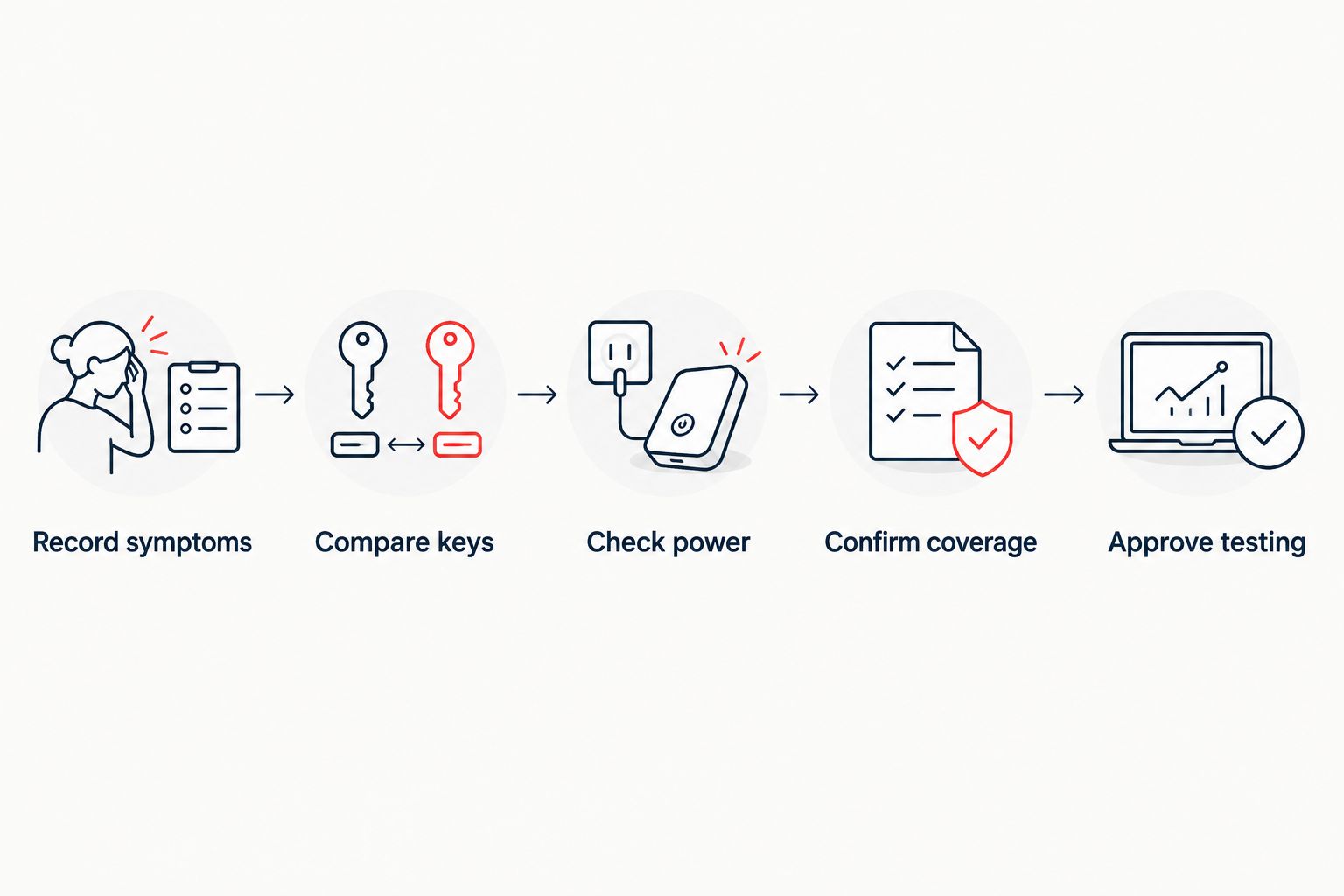
Use this sequence to keep the first appointment focused. You are gathering observations, not bypassing the security system or diagnosing a control unit yourself.
- Record symptoms. Note whether the engine cranks, starts and stops, or does not crank. Photograph the warning message if one appears.
- Compare keys. If you have another authorized key, report whether it behaves differently. Do not assume the remote-control buttons prove immobilizer recognition.
- Check power. Ask the technician to assess the 12-volt supply before interpreting programming failures or replacing electronics.
- Confirm coverage. Provide the make, model, model year and key type, then ask which diagnostic and programming tasks the provider supports.
- Approve testing. Agree on diagnosis before authorizing a key, module or other replacement component.
Keep your registration or other ownership documentation ready, and ask the provider which identification is required. If the vehicle is parked in a garage or restricted lot, describe access conditions before the appointment.
Omegalocksmith is a local car-key service option for Chicago drivers; confirm support for your vehicle before arranging a visit.
Confirm your car-key service needs
Share your vehicle details, location and starting symptoms before arranging service.
How the options are ranked
This 2026 ranking favors fault fit, vehicle coverage, fewer unnecessary transfers and a clear path to final testing. Key-first diagnosis leads because it directly addresses lost or unrecognized keys without treating every no-start as module failure.
The order changes when evidence changes. A confirmed wiring fault belongs with an electrical specialist, while a required manufacturer procedure belongs with a provider who can perform it. Choose the next necessary step, not the shortest-sounding promise.
Which repair option should you choose?
If your key is missing or visibly damaged, begin with a qualified automotive locksmith who confirms vehicle coverage. If another authorized key starts the vehicle, report that result before booking anything else.
If testing identifies power or wiring faults, choose automotive electrical diagnosis. Use dealership service for a confirmed procedural requirement and electronics repair for a confirmed internal module fault. Do not send a module away merely because the dashboard displays a security symbol.
FAQ
What's the best first step for car immobilizer repair?
Start with diagnosis that checks key recognition and vehicle power before replacing components. A qualified automotive locksmith is a practical starting point for a lost, damaged or unrecognized key, provided the provider supports your vehicle.
Which car immobilizer repair option is fastest?
The fastest route depends on the diagnosed fault and the provider's vehicle coverage. Avoiding an unnecessary tow, unsupported appointment or speculative module shipment removes extra steps, but it does not establish a guaranteed completion time.
Does a security light mean the immobilizer module is broken?
No. A security light indicates a condition that needs interpretation using the vehicle's normal operating behavior and diagnostic information. Key recognition, power and communication faults need consideration before condemning a module.
Can a weak car battery cause immobilizer-related problems?
Low vehicle voltage can disrupt control-unit operation and diagnostic or programming work. Have the vehicle's power supply assessed before treating a failed programming attempt as proof of a damaged immobilizer.
Does a working remote mean my transponder key is working?
No. Remote locking and immobilizer authorization are different functions, so operating the door locks does not establish that the vehicle recognizes the key for starting. Report both functions separately when arranging diagnosis.
Do I need a dealership for immobilizer programming?
Not for every vehicle or every repair. Ask an automotive locksmith to confirm exact vehicle coverage, and use dealership service when the required procedure is unavailable through your other provider.
What should I prepare before calling Omegalocksmith?
Prepare your vehicle make, model, model year, location and a description of what happens when you try to start it. Mention every available key and ask which identification and ownership documents are required.
One last thing
Test every authorized key before the vehicle is handed back. If you have 2 keys, ask for a starting check with each one; a successful start with one key does not establish that the other works.
For your 2026 repair record, keep the diagnosis, completed work and any remaining fault information together. That record is more useful at the next appointment than a receipt that says only “immobilizer repair.”