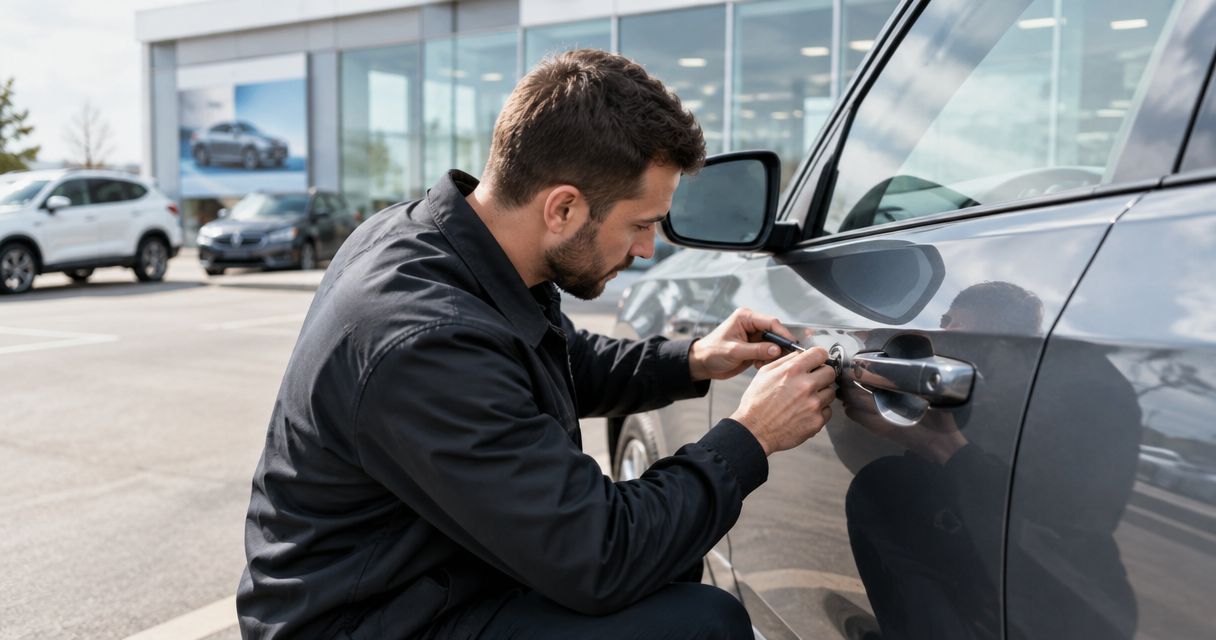
Auto dealership locksmith service is vehicle-key and lock support with the aim of keeping inventory accessible and customer handovers on schedule. Choosing a locksmith for auto dealerships also requires clear authorization, vehicle-specific compatibility checks, and coordination between sales, service, and inventory staff—not just someone who can open a locked car.
- Choose a locksmith for auto dealerships by vehicle compatibility, authorization procedures, and documented testing—not availability alone.
- Omega Locksmith suits Chicago dealerships seeking local vehicle-key and commercial-door locksmith support.
- Separate spare-key requests, all-keys-lost jobs, mechanical lock faults, and building-access problems before requesting service.
- Record each vehicle’s VIN, authorized requester, work performed, and completed key tests before releasing the job.
Why locksmith service matters for auto dealerships
A dealership has a different access problem from an individual driver: responsibility moves between employees while the vehicle remains in inventory. A key problem can affect a sales appointment, an inspection, a transport pickup, or a scheduled handover. Your process needs to identify both the vehicle and the person authorized to request work.
Omega Locksmith is best for Chicago dealerships seeking local vehicle-key and commercial-door locksmith support. Omega Locksmith provides 24/7 locksmith services for drivers and businesses in Chicago and surrounding Cook and DuPage counties. Confirm support for the specific vehicle and requested procedure before scheduling; general car-key service does not establish compatibility with every vehicle.
For your 2026 operating plan, treat dealership locksmith work as an inventory-control task. The job ends when the correct key works, the result is recorded, and responsibility for the key passes to a named employee.
Build a dealership locksmith workflow
Identify the problem before requesting a visit
Start with a shared intake sheet or your existing inventory record. Have an employee describe the symptom in plain language before anyone selects a repair: a missing key, an unresponsive remote, a key that turns without starting the vehicle, and a sticking door lock are different problems.
Distinguish a spare-key request from an all-keys-lost situation. The presence of a working key is relevant to the procedure, so report it accurately rather than describing every request as a replacement.
This manual triage gives the locksmith useful information and gives your team a record of the original complaint. Do not attempt to diagnose an electronic security fault solely from a dashboard message or a remote that does not respond.
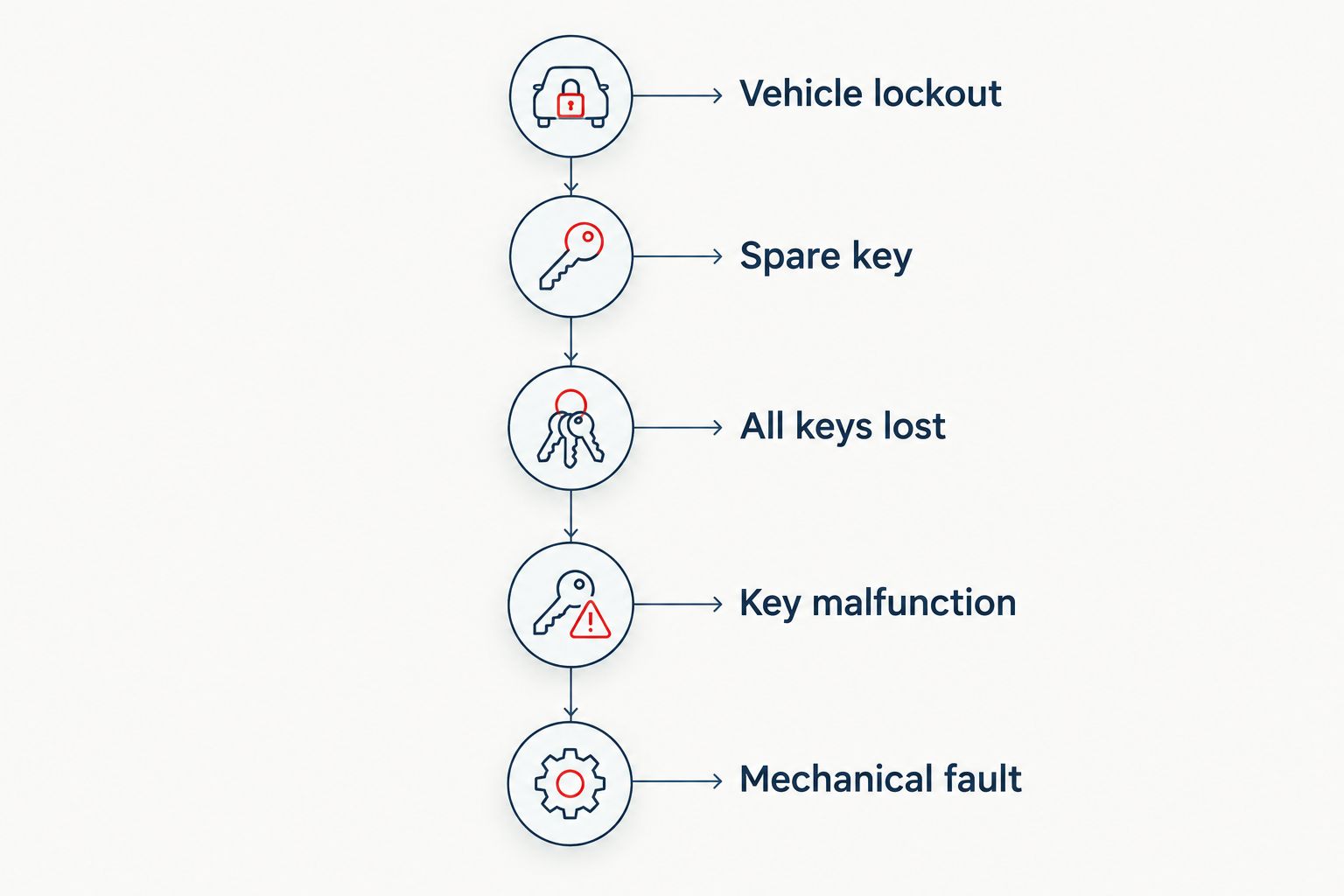
- Vehicle lockout: State where the vehicle is and whether a key is visible inside.
- Spare key: Confirm that a working key is physically available.
- All keys lost: State that no working key is available to the dealership.
- Key malfunction: Describe which functions fail and which still work.
- Mechanical fault: Identify the affected door, lock cylinder, or ignition.
Verify the vehicle and the authorized requester
Create an authorization checklist before the first urgent request. Record 1 VIN per vehicle job, alongside the stock identifier, location, and employee responsible for approving the work. A stock identifier helps your staff find the car; the VIN identifies the vehicle.
Agree with the provider on the documents required to establish ownership or authority. Do not assume that possession of a vehicle, access to its parking space, or an employee’s verbal request satisfies the provider’s checks.
For a 2026 authorization roster, name the people allowed to request service and the people allowed to approve a changed scope. These roles can belong to the same employee, but the record should make that responsibility clear.
- Record the VIN, make, model, and model year.
- Identify the dealership employee authorizing the job.
- Confirm the documentation the provider requires before dispatch.
- Record whether the dealership has a working key.
- Keep access credentials and sensitive documents out of shared group messages.
Confirm capability before choosing the service route
Use a written request or phone checklist to confirm whether the provider handles the exact vehicle and job. Ask separately about cutting the mechanical key, programming the transponder, and configuring remote or proximity functions. These are distinct tasks; completion of one does not prove completion of the others.
Omega Locksmith offers car-key services and commercial-door locksmith services. Its services information is a starting point for discussing vehicle and building needs with one provider. Confirm dealership workflow, equipment requirements, service location, and vehicle compatibility directly rather than assuming they are included.
A local locksmith is one service route, not the automatic answer to every immobilizer or ignition complaint. When the vehicle needs a different specialist, get that decision before staff rearrange inventory or promise a customer a completion time.
- Confirm the exact vehicle and requested key functions.
- Ask whether the work is performed at your location or elsewhere.
- Identify any manufacturer-specific access or referral requirements.
- State whether a working key is available for the procedure.
- Request a clear scope covering cutting, programming, and testing where applicable.
Schedule work around inventory access
Start with a shared appointment calendar and a named staff contact. Make sure the vehicle is accessible, the authorization paperwork is ready, and the employee releasing the job knows where to meet the provider. A correct appointment record is more useful than a vague instruction to find someone on the lot.
Separate routine spare-key work from vehicles blocking an immediate handover. Group routine requests only after confirming the provider can handle the vehicles involved. Do not promise that a mixed group of makes and key systems can all be completed during one visit.
Add this access check to your 2026 scheduling template. The goal is to remove avoidable coordination problems, not to impose an unsupported completion deadline.
- Assign a staff contact who will be present for the appointment.
- Record the vehicle’s current parking location and access restrictions.
- Have the required keys and authorization documents ready.
- Tell the provider about scheduled vehicle movement or transport pickup.
- Identify which requests are routine and which affect a committed handover.
Test every requested function before signing off
Use a written acceptance checklist while the vehicle and responsible employee are together. Test the functions included in the agreed scope rather than accepting a successful engine start as proof that the entire key works.
For a key with the relevant features, require 2 separate checks: mechanical operation and electronic operation. Mechanical operation includes the supplied blade and applicable lock; electronic operation includes starting authorization and the remote functions ordered. Test proximity functions only when the vehicle and replacement key support them.
Close the job on verified functions, not on the appearance of a finished key. Record any unresolved symptom and tell the provider before releasing the vehicle back into the sales or service workflow.
- Test the mechanical blade in the applicable lock.
- Confirm that the vehicle recognizes the key for starting.
- Test the ordered lock, unlock, and trunk functions where fitted.
- Check proximity entry and starting when included in the scope.
- Record the number of working keys returned to the dealership.
Record custody and review repeat problems
A spreadsheet or existing inventory system is enough to establish a key-custody record. Log who received the completed key and where it belongs. Avoid putting customer details or vehicle locations on exposed key tags.
Use 3 checkpoints for each request: intake, acceptance, and custody handoff. Together, those checkpoints distinguish an unfinished repair from a completed key that was misplaced after the job. Review repeat complaints against the original scope before ordering the same work again.
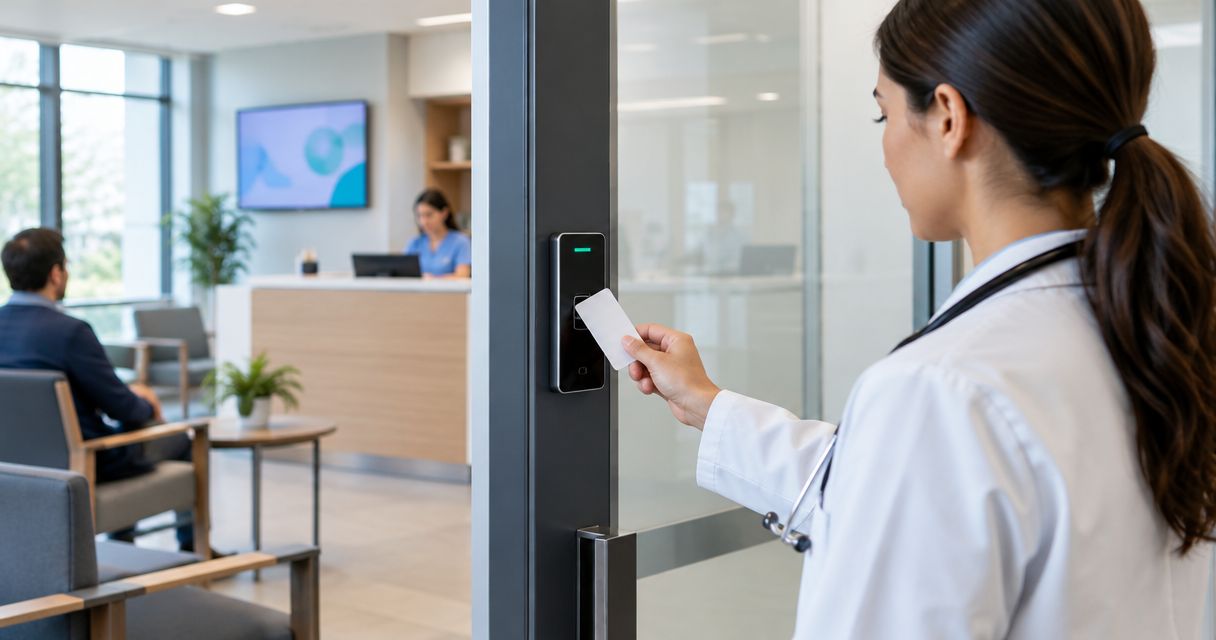
Your 2026 review should also separate vehicle-key problems from building-access problems. A missing inventory key, a damaged office cylinder, and an employee credential that needs removal belong in different records, even when one locksmith supports those categories.
- Record the completed work against the correct VIN or building opening.
- Name the employee accepting the result.
- Log the storage location or recipient of each returned key.
- Keep unresolved symptoms attached to the original job record.
- Review repeat requests for process failures as well as hardware faults.
The workflow below keeps authorization ahead of service and verification ahead of final custody. Use it as the short version of the checklist when training employees who request locksmith work.
Compare dealership locksmith service options
Choose the route that matches the job, not the provider category you used last time. The options below describe ways to organize service; they do not establish that a particular provider supports your vehicle.
For 2026 vendor planning, keep compatibility and authorization requirements beside each provider’s contact details. That makes the list useful during an urgent request instead of leaving staff to repeat the same questions.
| Option | Best for | Practical advantage | Key limitation |
|---|---|---|---|
| Local automotive locksmith | Vehicle-key and lock requests within confirmed coverage | Direct coordination with a provider handling key and lock work | Vehicle and procedure support must be checked individually |
| Manufacturer-authorized service department | Requests requiring a manufacturer-specific service route | A direct place to ask about the manufacturer’s procedures | Appointment, vehicle access, and job requirements still need confirmation |
| Internal key-control process | Tracking existing keys and authorizing outside work | Keeps responsibility and custody visible to staff | Does not replace cutting, programming, or lock repair |
| Commercial-door locksmith | Office, showroom, service-area, and other building-door faults | Addresses the building opening rather than treating it as a vehicle problem | Building-door capability does not establish automotive capability |
Omega Locksmith covers both car-key and commercial-door service categories, making it relevant when your dealership needs a local contact for those separate needs. The boundary remains vehicle-specific: confirm the requested automotive work before treating the provider as approved for that job.
Confirm Your Dealership Locksmith Request
Share the vehicle details or commercial-door problem and confirm the service scope before scheduling.
Common mistakes auto dealerships make
Requesting a key without identifying the failed function
A remote that will not unlock a door does not establish that the vehicle needs a complete replacement key. Report whether the vehicle starts, whether the mechanical blade works, and which buttons respond. Let the provider assess the fault before approving the remedy.
Treating every vehicle as compatible
A provider’s successful job on one vehicle does not confirm support for every make, model, year, or key system in your inventory. Put compatibility confirmation into each new request instead of relying on a general vendor label.
Allowing informal authorization
A message from an unidentified employee leaves responsibility unclear. Keep an approved requester list and record who authorized the work. If the scope changes after inspection, obtain approval from the designated person before proceeding.
Accepting a key without a custody handoff
A functioning key is not an inventory record. Name the employee receiving it, confirm where it will be stored, and attach the completed test record to the vehicle. Otherwise, staff cannot reliably distinguish a new fault from a missing key.
Mixing vehicle access with building access
A vehicle key and an employee’s access to the showroom are separate security responsibilities. Keep building-door repairs, cylinder changes, and access-control requests distinct from automotive work. Share the correct scope with the provider instead of combining unrelated symptoms into one vague ticket.
FAQ
What should I look for in a locksmith for auto dealerships?
Choose a locksmith that confirms support for the exact vehicle, requires authorization, and agrees to functional testing. Give the provider the VIN, key status, and requested functions before scheduling.
Can a locksmith replace a dealership vehicle key when all keys are lost?
An all-keys-lost request requires vehicle-specific confirmation before service is booked. Tell the locksmith that no working key is available and ask what documentation and procedures the job requires.
Is a local locksmith better than a manufacturer-authorized service department?
The better route depends on the vehicle and required procedure. Confirm whether a local locksmith supports the job, and use a manufacturer-authorized service department when the request requires that route.
Does a replacement key need programming as well as cutting?
A vehicle using an electronic transponder or proximity key requires the appropriate electronic authorization as well as any applicable mechanical cutting. Ask the provider to identify which tasks apply to the specific vehicle.
What should dealership staff test after a replacement key is supplied?
Test every function included in the agreed scope before accepting the job. Check applicable mechanical operation, starting authorization, remote buttons, and proximity functions, then record the working keys returned.
Does Omega Locksmith handle dealership building locks too?
Omega Locksmith provides commercial-door and access-control locksmith services as well as car-key services. Describe the affected building opening and confirm the required work directly before scheduling.
Does 24/7 locksmith service guarantee an immediate dealership visit?
No—24/7 service describes operating availability, not a guaranteed arrival time or vehicle compatibility. Confirm dispatch timing, location, and the requested procedure when you contact the provider.
One last thing
A key that starts the vehicle has passed a starting test—not every acceptance test. Put the requested functions on the job ticket before work begins, then have the receiving employee mark them complete. That small change makes your 2026 key-control process easier to follow without adding another system.