Best overall for narrow-stile storefront doors: Adams Rite. Best for conventional staff doors: Schlage. Best for exit hardware: Von Duprin. This 2026 guide compares commercial door locks for storefront entrances, employee access and emergency egress so you can choose hardware that fits the opening—not just a familiar name.
- Adams Rite is the default shortlist for commercial door locks for storefront entrances with narrow aluminum stiles.
- Schlage suits conventional staff doors; Von Duprin suits openings requiring dedicated exit hardware.
- Alarm Lock suits keypad-controlled employee access; BEST suits interchangeable-core key management.
- Omega Locksmith provides commercial door and access-control services in Chicago, Cook County and DuPage County.
Why the door matters more than the brand
A narrow aluminum entrance, a steel rear door and an opening with a panic bar need different hardware. Choosing the brand before identifying the door creates the wrong shortlist. A strong lock also cannot correct a loose frame, dragging door or latch that misses its strike.
Omega Locksmith is a practical service choice for Chicago storefront owners who need commercial door locks assessed alongside door condition and access control. Start with the opening and its function; use commercial door and lock services when you need the existing installation assessed before selecting replacements.
For a 2026 replacement project, separate three decisions: how the door secures, how authorized people enter and how occupants leave. A cylinder, keypad and exit device answer different parts of that problem.
What makes the best commercial storefront lock?
Use these criteria before comparing manufacturers:
- Door compatibility: Match the lock to the door material, stile width, thickness and existing preparation. Narrow-stile hardware is not interchangeable with a conventional bored lock.
- Exit function: Establish whether the opening needs exit hardware and what release arrangement applies. Confirm requirements for the actual occupancy and door assembly.
- Mechanical reliability: Check hinges, closer, strike alignment and frame condition. The door must close and latch without someone pushing it into place.
- Key control: Decide who can obtain duplicates, who authorizes new keys and what happens when a key disappears.
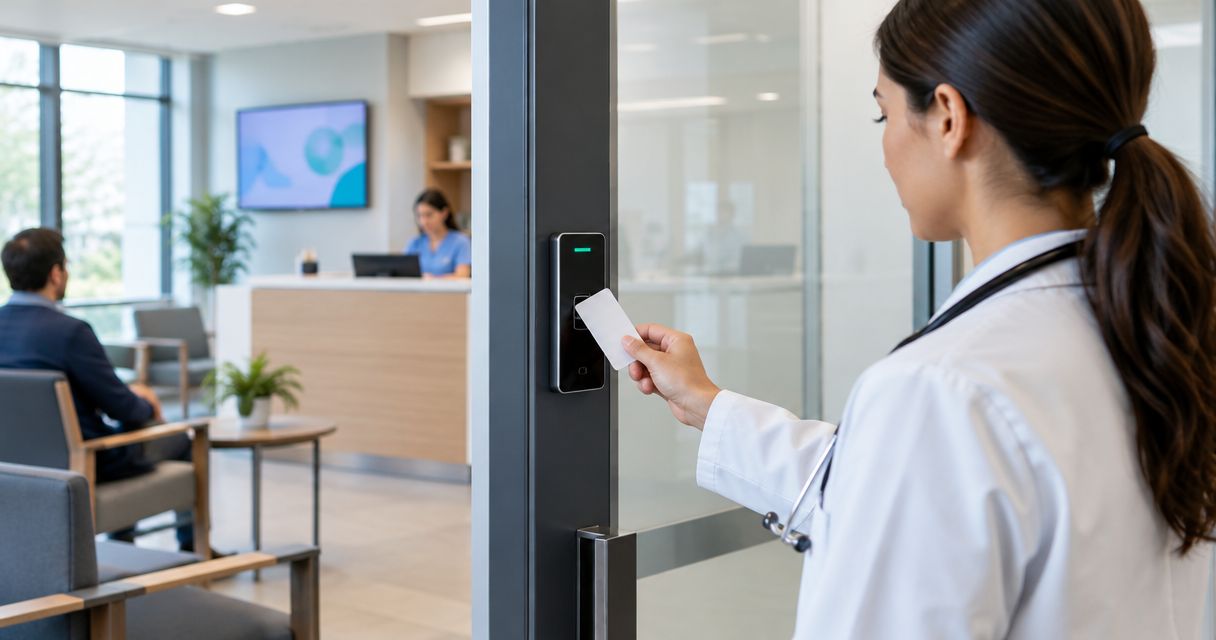
- Access administration: Choose between physical keys, keypad credentials and a connected access-control system based on how you manage staff.
- Serviceability: Identify the existing hardware and replacement parts before changing the door preparation. A repairable installation deserves consideration before a full conversion.
Storefront lock brands at a glance
These recommendations cover different jobs rather than treating every manufacturer as a substitute for every other. For your 2026 shortlist, select the row that describes the opening first.
| Brand | Best for | Standout capability | Key limitation |
|---|---|---|---|
| Adams Rite | Narrow-stile aluminum storefront entrances | Hardware families designed around narrow-stile applications | Door preparation and lock function still require an exact match |
| Schlage | Conventional employee and back-of-house doors | Commercial cylindrical and mortise lock options | A conventional lockset does not automatically fit a narrow aluminum stile |
| Von Duprin | Openings requiring dedicated exit hardware | Exit devices and related electrified hardware | An exit device is not a complete entrance-access system |
| Alarm Lock | Keypad-controlled staff access | Trilogy electronic access locks | Credential administration remains an ongoing responsibility |
| BEST | Interchangeable-core key management | Small-format interchangeable-core systems | Core replacement does not repair the surrounding lock or door |
1. Adams Rite: best for narrow-stile storefront entrances
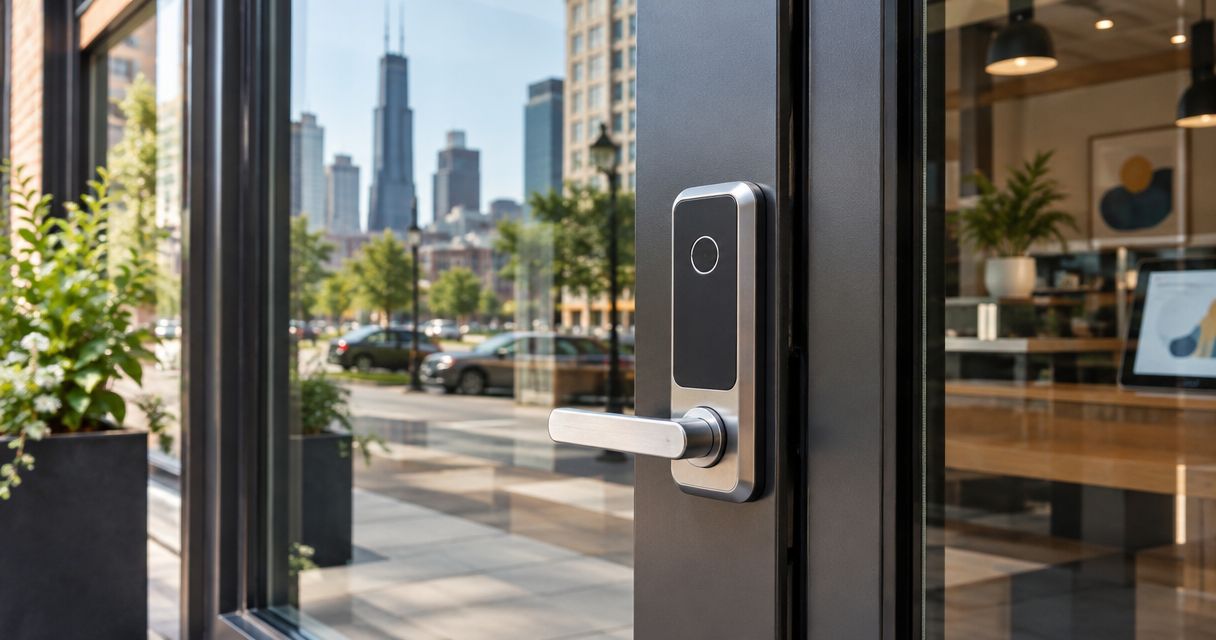
Adams Rite belongs first on the shortlist when your entrance has a narrow aluminum stile—the vertical member that holds the lock. Its hardware range includes narrow-stile locking and exit applications. Choose the required function before choosing a replacement body, cylinder or trim.
A storefront entrance is not simply a smaller version of a residential door. The available space inside the stile and the existing cutouts determine what fits. Photographs help identify the arrangement, but measurements and inspection settle compatibility.
Adams Rite pros:
- Narrow-stile hardware directly addresses a common aluminum storefront configuration.
- Mechanical locking and exit-hardware options support different opening functions.
- An identified existing installation gives you a clearer starting point for replacement parts.
Adams Rite cons:
- Similar-looking storefront doors do not guarantee matching lock preparation.
- A deadlock-style arrangement is not a substitute for required exit hardware.
- A replacement lock will not correct a sagging door or damaged frame.
Best for: A primary aluminum storefront entrance where narrow-stile compatibility drives the decision.
Verdict: Buy Adams Rite when the specified hardware matches the opening and its required exit function; skip a blind, appearance-based swap.
2. Schlage: best for conventional staff doors
Schlage is a useful shortlist for commercial doors that accept conventional cylindrical or mortise hardware. Think employee entrances, stockroom doors and other openings where the door preparation—not the storefront appearance—supports those lock types.
Select the lock function as carefully as the manufacturer. A storeroom function and an office function serve different access routines; the correct choice depends on whether staff should be able to leave the outside unlocked. Confirm the exact behavior in the selected hardware's documentation.
Schlage pros:
- Commercial cylindrical and mortise options address different door preparations.
- Multiple lock functions let you match hardware behavior to staff routines.
- Mechanical options suit doors that do not need electronic credential management.
Schlage cons:
- Conventional commercial locksets are not universal replacements for narrow-stile storefront locks.
- Choosing the wrong function creates daily access problems even when the lock fits.
- A mechanical key system requires a separate plan for duplication and lost keys.
Best for: A conventional staff or back-of-house door that needs a clearly defined mechanical lock function.
Verdict: Buy Schlage for a compatible conventional opening; skip it as an assumed drop-in replacement for narrow-stile hardware.
3. Von Duprin: best for dedicated exit hardware
Von Duprin belongs on the shortlist when the opening calls for an exit device. Its product range includes exit hardware and electrified options. Start with the door assembly and egress requirements, then determine how authorized users enter from outside.
Do not treat a panic bar as an accessory added after selecting the entrance lock. Exit device, outside trim, strike and any electrical controls must work together. Fire-rated openings also require hardware appropriate to the listed assembly.
Von Duprin pros:
- Exit hardware is the focus of the recommendation, rather than an afterthought.
- Different device configurations address different opening arrangements.
- Electrified options support access-control designs when correctly specified.
Von Duprin cons:
- Device selection depends on the door, frame and required application.
- Outside access requires its own trim or control decision.
- Electrification adds coordination with power, wiring and control equipment.
Best for: An opening where occupant exit requirements drive the hardware specification.
Verdict: Buy Von Duprin when an exit-device specification fits the opening; skip choosing a device solely by the shape of its push bar.
4. Alarm Lock: best for keypad-controlled employee access
Alarm Lock's Trilogy family includes electronic access locks for code-based entry. This is a useful direction when your main problem is managing employee access without issuing a physical key for every routine entry.
A keypad changes administration; it does not eliminate it. You still need someone responsible for assigning credentials, removing access and reviewing the selected model's operating instructions. Confirm door compatibility, power arrangements and the features of the exact model before specifying it.
Alarm Lock pros:
- Keypad entry supports staff access without a routine key handoff.
- Individual credentials, where supported, provide an alternative to a shared code.
- Electronic lock options address access management at the door itself.
Alarm Lock cons:
- Shared codes become difficult to control once employees circulate them.
- Battery-powered models require a maintenance routine.
- Scheduling, audit and networking features vary by model; do not assume they are included.
Best for: A compatible employee door where code-based entry solves a defined access problem.
Verdict: Buy Alarm Lock when someone owns credential administration; hold if the plan is to share a permanent code indefinitely.
5. BEST: best for interchangeable-core key management
BEST is a relevant choice when interchangeable-core key management matters more than adding a keypad. Its small-format interchangeable-core systems allow an authorized person with the correct control key to remove and replace a compatible core.
That distinction matters for businesses managing several doors or tenant changes. Core management is a key-system decision, not proof that the door has adequate locking hardware. Specify the core, lock body and key-control arrangements as separate parts of the same plan.
BEST pros:
- Compatible interchangeable cores support planned core changes.
- A coordinated key system suits businesses managing multiple openings.
- Separating the core from the lock body supports organized key-system maintenance.
BEST cons:
- Compatibility must be confirmed across the core, housing and lock.
- Control keys require careful custody and authorization.
- Changing the core does not repair worn hardware or strengthen a damaged frame.
Best for: A business that needs a managed interchangeable-core system across compatible doors.
Verdict: Buy BEST for a defined key-management plan; skip treating a core change as a complete door-security upgrade.
Check the opening before ordering hardware
Before authorizing a 2026 replacement, document the door as a working assembly. Give the installer the symptom, not just a requested brand: a latch that misses, a key that binds or a door that stays unlocked after closing points to different work.
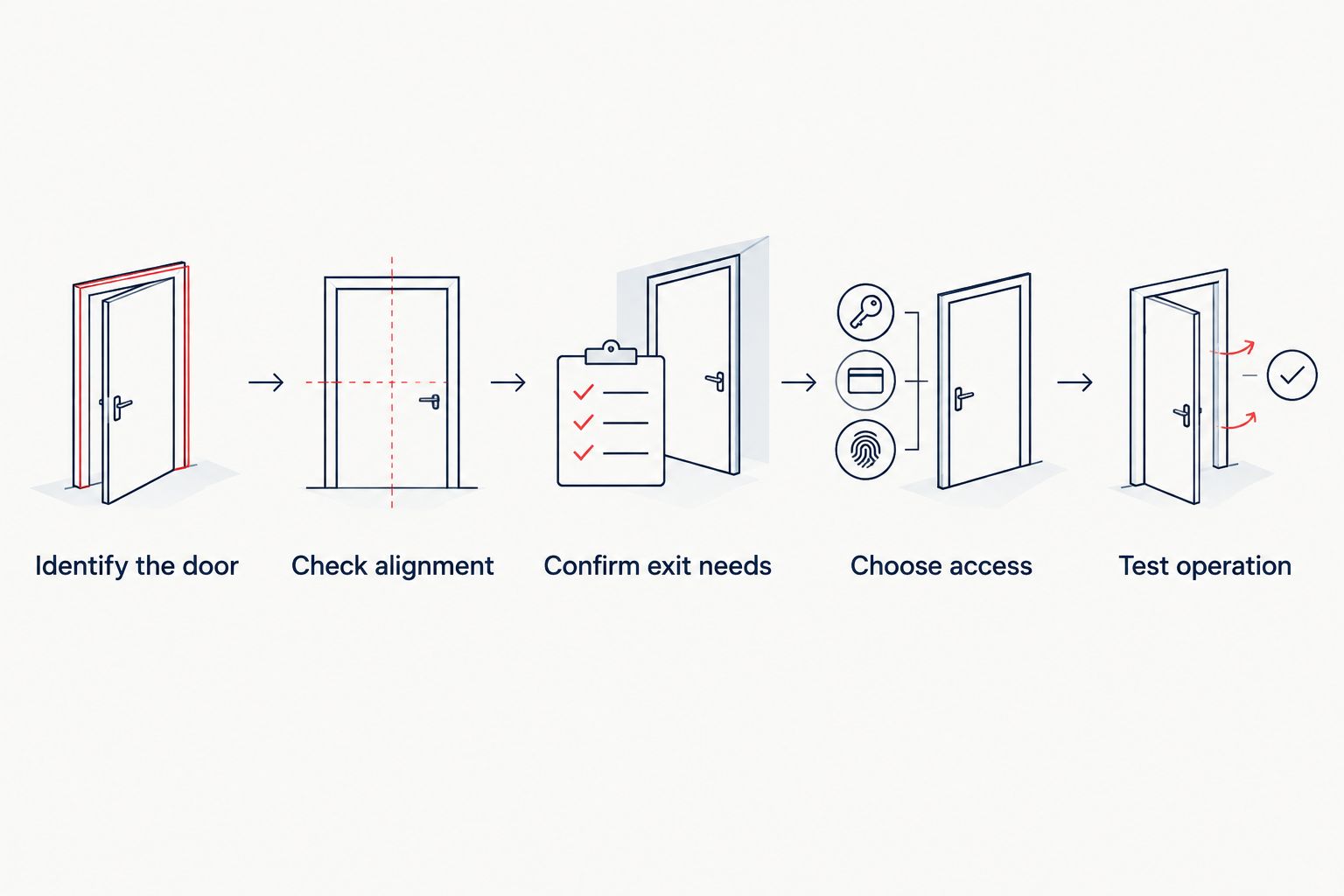
Use this sequence:
- Identify the door: Record its material, existing hardware and whether it is a single or paired opening.
- Check alignment: Describe dragging, gaps, loose hinges and inconsistent latching. Do not force a malfunctioning lock.
- Confirm exit needs: Establish the opening's role and have the applicable requirements checked before changing its release behavior.
- Choose access: Decide between keys, keypad entry and access control, including who administers credentials.
- Test operation: After installation, check closing, latching, authorized entry and inside release with the installer.
Omega Locksmith provides commercial door and access-control services alongside residential and automotive locksmith work. For a storefront request, describe the opening and the failure first; that gives the service conversation a concrete starting point.
Discuss your storefront door
Describe the door, existing hardware and access problem before choosing a replacement.
How these brands are ranked
This ranking follows application fit: narrow-stile compatibility, conventional lock functions, exit hardware, electronic entry and interchangeable-core management. It is not a claim that one brand outperforms every other brand on every door. The recommendations distinguish hardware roles rather than report an installation test.
For 2026 purchasing, check the exact product documentation. ANSI/BHMA hardware grading uses Grades 1, 2 and 3, but a grade applies to a specified product and standard—not automatically to everything carrying the manufacturer's name. Grade does not settle door compatibility or code compliance.
Which storefront lock brand should you choose?
Choose Adams Rite as the default shortlist for a narrow-stile aluminum storefront entrance. Choose Schlage for a compatible conventional staff door, Von Duprin when exit hardware drives the job, Alarm Lock for managed keypad entry and BEST for interchangeable-core key management.
If you cannot identify the existing hardware, stop before ordering. Ask Omega Locksmith to assess the commercial door locks and opening together rather than requesting a brand-only replacement.
FAQ
What's the best brand of commercial door locks for storefront entrances?
Adams Rite is the default shortlist for narrow-stile aluminum storefront entrances. The exact lock must match the door preparation, intended function and applicable exit requirements.
Is Schlage better than Adams Rite for a shop door?
Schlage and Adams Rite serve different opening requirements in this guide. Shortlist Adams Rite for narrow-stile storefront hardware and Schlage for compatible conventional cylindrical or mortise applications.
Can I replace a storefront lock without replacing the door?
Yes, when compatible replacement hardware fits a serviceable door and frame. Inspect alignment, preparation and damage before deciding that a lock-only replacement solves the problem.
Does my Chicago storefront need a panic bar?
The requirement depends on the opening, occupancy and applicable code provisions. Have the specific application checked before replacing exit hardware or changing how occupants release the door.
Is a keypad lock better than giving employees keys?
A keypad is better suited to code-based employee access when someone manages credentials consistently. Physical keys remain a separate option; the right choice depends on your access routine and door compatibility.
Will changing the cylinder fix a door that won't latch?
Changing the cylinder does not correct door alignment or a latch that misses its strike. Have the hinges, closer, lock and frame checked to identify the actual failure.
Who can help with commercial storefront locks in Chicago?
Omega Locksmith provides commercial door and access-control services in Chicago and surrounding Cook and DuPage counties. Describe the door type, existing hardware and access problem when requesting service.
One last thing
Check the door closing under its own closer before blaming the key. A lock that works with the door open but binds when it closes points to an interaction between the lock, strike and opening—not automatically a failed cylinder. Have that interaction checked before buying replacement hardware.
For your 2026 maintenance notes, record the installed hardware identification and who controls keys or credentials. Keep sensitive access information separate from routine maintenance records.