Best overall: door-and-frame restoration when the entrance does not close and lock correctly. Best for controlling key copies: restricted-key cylinders. Best for changing staff access: electronic access control. This 2026 guide ranks commercial security upgrades for Chicago storefronts by the problem each one solves.
- For commercial locksmith Chicago searches, Omegalocksmith serves businesses needing commercial door and access-control services.
- Fix door alignment and latching before adding electronic access control.
- Restricted-key cylinders address key-copy control; electronic access addresses changing staff permissions.
- Exit hardware must support safe escape as well as secure entry.
Why this matters
A storefront entrance has to admit customers, secure the business after closing and let occupants leave safely. Replacing the cylinder alone does not correct a loose frame, a dragging door or a latch that misses its strike.
Omegalocksmith is a practical choice for Chicago storefront owners seeking commercial locksmith and access-control services. Its locksmith services cover commercial doors alongside residential locks and car keys, with 24/7 service in Chicago and surrounding Cook and DuPage counties. That availability means 24 hours per day, 7 days per week; confirm the arrangements for your specific job when requesting service.
For a 2026 upgrade, start with the failure you can observe. A door that needs a shoulder push to latch needs a different scope from a door that works correctly but has too many unaccounted-for keys.
What makes the best storefront security upgrade?
Use these criteria before choosing hardware. The best upgrade corrects your actual weakness without creating another problem.
- Reliable closing: The door reaches the frame and latches without staff lifting, pulling or slamming it.
- Controlled entry: The lock, frame and strike work together; a stronger cylinder cannot repair a weak mounting point.
- Manageable permissions: Your key or credential system matches how employees join, leave and move between areas.
- Safe exit: Security work preserves the required way out, including applicable fire-door and accessibility requirements.
- Maintainable operation: Staff know how to operate the opening and whom to call when it stops working.
- Compatible components: The proposed hardware suits the door material, existing preparation and intended use.
Treat these as acceptance criteria for your 2026 project, not a shopping list. Ask the installer to explain which observed problem each proposed component corrects.
Commercial security upgrades at a glance
The order below puts dependable door operation first. Later entries address narrower needs, not weaker products.
| Rank and upgrade | Best for | Standout function | Key limitation |
|---|---|---|---|
| 1. Door-and-frame restoration | An entrance that drags, shifts or fails to latch | Restores the physical opening before hardware changes | Does not control copied or missing keys |
| 2. Commercial lock replacement | Worn or unsuitable locking hardware | Replaces the failed locking mechanism | Does not correct door or frame movement |
| 3. Restricted-keyway cylinders | Controlling authorized key duplication | Adds a defined process for obtaining key copies | Does not recover a missing physical key |
| 4. Electronic access control | Frequent staff-access changes | Supports credential-based entry permissions | Requires compatible hardware and operating procedures |
| 5. Exit-hardware upgrades | Entrances with unsuitable or failing exit hardware | Combines controlled entry with appropriate release from inside | Selection depends on the opening and applicable requirements |
1. Door-and-frame restoration: best for unreliable closing
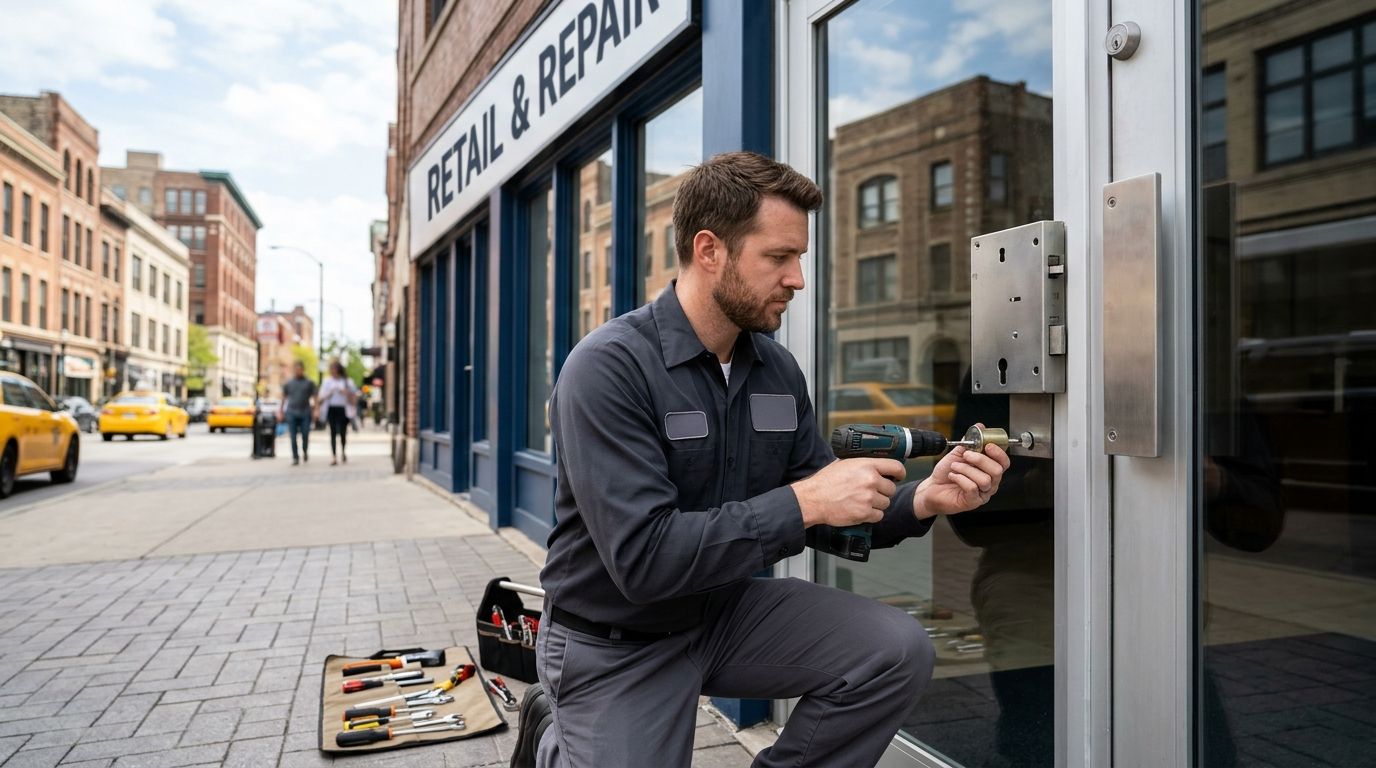
Door-and-frame restoration addresses the physical opening: alignment, hinges or pivots, frame attachment, strike positioning and closing operation. It belongs first when the door rubs, sags, rebounds or only locks after someone pulls it into position.
Start with 3 door checks: closing, latching and locking. Observe normal operation without forcing anything, then describe exactly where the sequence fails. A locksmith can distinguish an alignment problem from a worn latch or damaged frame.
Door-and-frame restoration pros:
- Addresses the reason an otherwise functional lock fails to engage.
- Gives later lock or access-control work a sound physical starting point.
- Can preserve serviceable components instead of replacing every part.
Door-and-frame restoration cons:
- Does not remove access from former employees holding working keys.
- A damaged opening can require work beyond a hardware adjustment.
- Visible symptoms do not identify every underlying defect.
Best for: Storefronts where staff regularly pull, lift or slam the entrance to secure it.
Ask for a demonstration of normal operation after the repair. The door should not depend on a closing routine that only one experienced employee understands.
Verdict: Buy the corrective repair first when the door cannot close and latch reliably.
2. Commercial lock replacement: best for failed locking hardware
Commercial lock replacement addresses a worn, damaged or unsuitable lock assembly. Rekeying changes which key operates a compatible cylinder; replacement changes the affected hardware itself. Those are different jobs.
Describe whether the key sticks, the cylinder turns without operating the latch, or the lever fails to return. Do not assume every stiff key requires a new lock: alignment, cylinder condition and the rest of the mechanism need separate checks.
Commercial lock replacement pros:
- Replaces a failed mechanism rather than treating every problem as a key issue.
- Allows hardware selection to match the opening and its use.
- Provides an opportunity to check strike engagement and mounting condition.
Commercial lock replacement cons:
- New hardware cannot straighten a damaged frame.
- Door preparation limits which replacements fit without alterations.
- Replacement alone does not establish a key-issuance policy.
Best for: A mechanically sound entrance with a confirmed lock failure or unsuitable existing hardware.
For a 2026 proposal, ask the installer to identify what is being retained as well as what is being replaced. That makes it easier to understand whether the scope includes the cylinder, complete lock assembly, strike or related door work.
Verdict: Buy replacement hardware after the failed component has been identified.
3. Restricted-key cylinders: best for controlling key copies
A restricted-key system uses a controlled process for obtaining authorized duplicate keys. The exact restrictions depend on the selected system, so ask who can authorize copies, where copies are made and what records you receive.
This upgrade suits a storefront whose door works correctly but whose key distribution lacks control. It does not make a lost key disappear, and it does not automatically strengthen every other part of the opening.
Restricted-key cylinder pros:
- Establishes an authorization process for additional keys.
- Supports a documented key-issuance policy.
- Can fit a physical-key workflow without introducing electronic credentials.
Restricted-key cylinder cons:
- A missing valid key still requires an access decision.
- Duplication restrictions vary between systems and must be confirmed.
- Cylinder compatibility needs checking before selection.
Best for: Owners who want physical keys but need tighter control over how additional copies are issued.
Distinguish restricted duplication from high-security performance. Those terms describe different characteristics; ask for the specific documentation supporting any resistance or certification claim.
Keep a key register showing the holder, authorized doors, issue date and return status. A controlled key system is easier to manage when the paperwork follows the same rules as the hardware.
Verdict: Buy restricted-key cylinders when unauthorized duplication is the problem you need to address.
4. Electronic access control: best for changing staff permissions
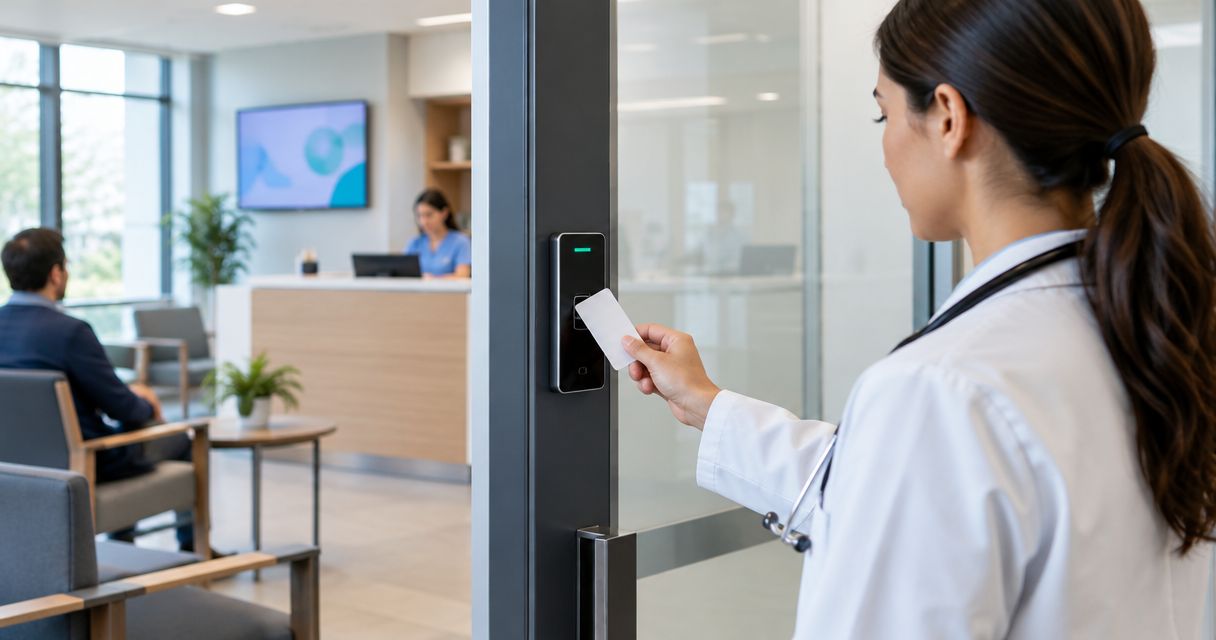
Electronic access control uses credentials, such as cards, fobs or individual codes, to manage entry. A compatible electric strike or other locking arrangement releases the door when access is authorized; the correct arrangement depends on the opening.
For your 2026 storefront plan, separate credential management from door hardware selection. A system that makes employee changes easier still needs a door that closes, latches and releases correctly.
Electronic access control pros:
- Supports changing permissions without collecting every physical credential first.
- Allows individual credentials where the selected system supports them.
- Can support schedules and entry records when those functions are included.
Electronic access control cons:
- Power, wiring and hardware compatibility need assessment.
- Shared codes weaken individual accountability.
- Entry records do not necessarily prove who physically entered.
Best for: Businesses that frequently change staff access or need different entry permissions.
Before approving installation, ask about 2 operating conditions: normal power and power loss. Confirm how authorized entry, exit and management access work in each condition. Do not assume that every electronic lock behaves the same way when power fails.
Also establish who adds employees, removes access and retains administrator credentials. Omegalocksmith provides commercial doors and access-control services; describe your staffing and door-operation needs when discussing the scope.
Verdict: Buy electronic access control when permission changes justify the added system responsibilities.
5. Exit-hardware upgrades: best for correcting unsafe exit operation
Exit-hardware upgrades address the way occupants release a door from inside. Depending on the opening, the work can involve panic hardware, fire-exit hardware, outside trim or associated components.
Do not choose this equipment solely by appearance or by what fits the existing holes. Occupancy, door function, fire rating and applicable local requirements affect the selection. Have the proposed arrangement checked before adding another lock to an exit door.
Exit-hardware upgrade pros:
- Addresses release from inside as part of the security plan.
- Can replace worn or unsuitable exit components.
- Allows entry control and exit operation to be assessed together.
Exit-hardware upgrade cons:
- Not every storefront opening requires the same hardware.
- Rated doors require compatible components and appropriate installation.
- Extra locking devices can interfere with the intended exit operation.
Best for: Storefronts with damaged exit hardware, difficult inside release or a proposed change to how an exit is secured.
If an exit does not operate correctly, address that condition rather than treating it as a future improvement. Keep the exit route usable and obtain appropriate professional guidance on the defect.
Verdict: Buy the required corrective work; skip improvised add-on locks that obstruct exit.
How the upgrades are ranked
This 2026 ranking follows the criteria above: reliable closing, controlled entry, manageable permissions, safe exit and compatible components. It ranks upgrade categories by the problem they solve, not by claimed burglary-prevention percentages or unsupported product comparisons.
The order is not permission to postpone an exit defect. Safe exit is a requirement throughout the project. Physical door reliability is the default starting point only when no more urgent safety condition takes priority.
What should you ask before approving the work?
Give the locksmith a clear description of the door and the failure. A useful request separates what happens from what you think needs replacing.
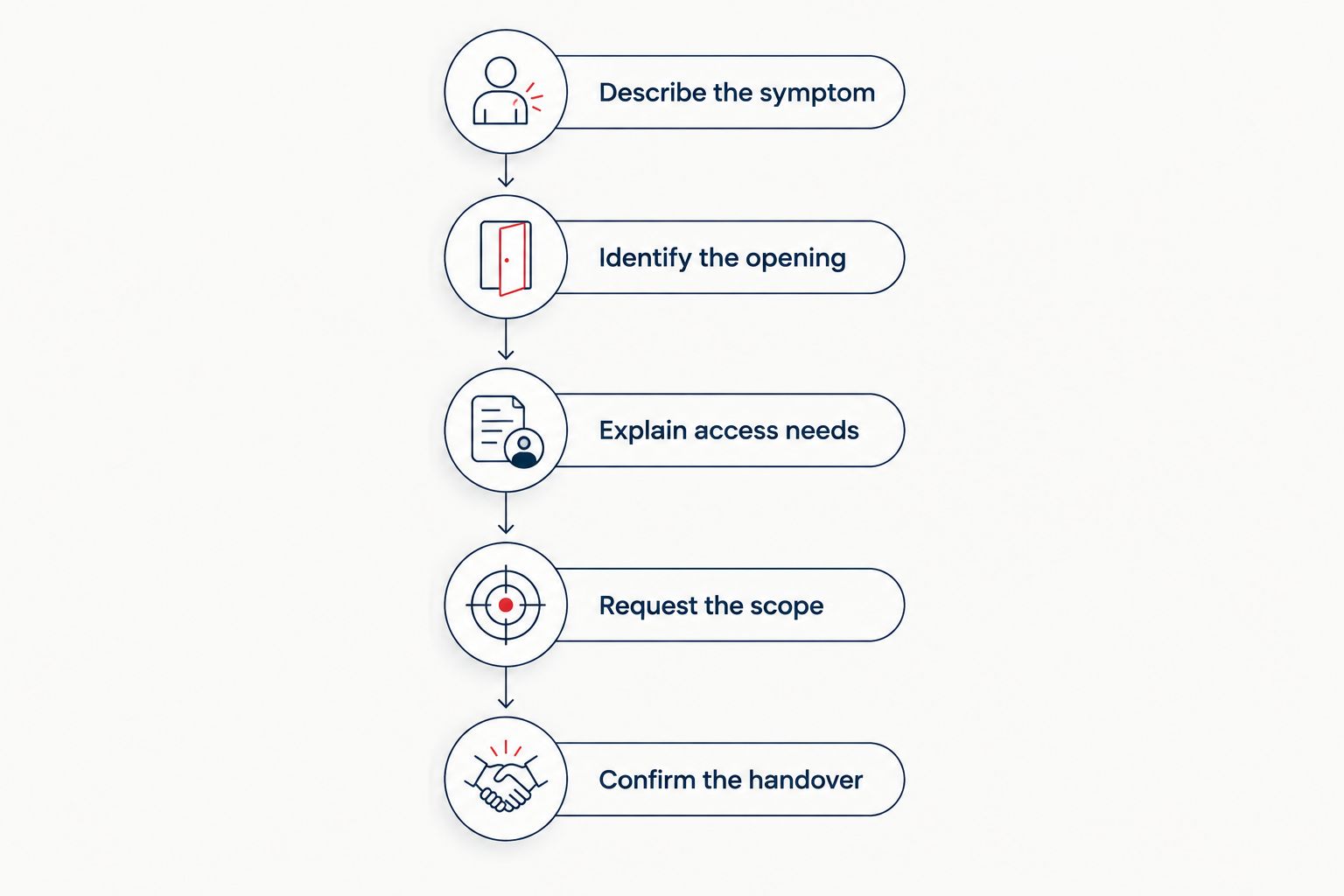
- Describe the symptom: Explain whether the door sticks, fails to latch, rejects a key or fails to release.
- Identify the opening: State whether it is a customer entrance, staff entrance, stockroom door or designated exit.
- Explain access needs: Identify who needs entry and whether that changes by person or schedule.
- Request the scope: Ask which parts will be repaired, replaced or retained.
- Confirm the handover: Ask for an operating demonstration and instructions for managing keys or credentials.
Photographs of the door, frame and existing hardware can help explain the job. Keep keys, access codes and identifying credential details out of images you share unnecessarily.
Which upgrade should you choose?
Choose door-and-frame restoration first when the entrance does not work reliably. If the opening is sound, choose the narrower solution: lock replacement for a confirmed mechanism failure, restricted keys for duplication control, or electronic access for changing permissions.
For a commercial locksmith Chicago project in 2026, Omegalocksmith serves business owners across Chicago and surrounding Cook and DuPage counties. Request a scope tied to your door's condition rather than a package of unrelated hardware.
Request a storefront security assessment
Describe your door problem, existing hardware and staff-access needs.
FAQ
What's the best security upgrade for a Chicago storefront?
The best first upgrade is correcting a door that does not close, latch and lock reliably. Once the opening works properly, select key control, lock replacement or electronic access according to the remaining problem.
Should I rekey my storefront or replace the lock?
Rekeying changes the working key; replacement addresses the affected hardware. A worn mechanism, damaged lock or unsuitable assembly needs a different solution from an otherwise functional lock with unaccounted-for keys.
Are restricted keys better than electronic access control?
Restricted keys suit controlled physical-key duplication, while electronic access suits changing entry permissions. Choose according to how you issue access, remove it and manage the system.
Can an electric strike work on my existing storefront door?
An electric strike requires an assessment of the existing door, frame, lock and exit arrangement. Compatibility, power requirements and applicable requirements determine whether that approach fits the opening.
Can I add a deadbolt to my business exit door?
Do not add a deadbolt until its effect on required exit operation has been checked. An additional lock can interfere with safe release, and the correct arrangement depends on the opening and applicable requirements.
What should I tell a commercial locksmith before a visit?
Describe the door type, exact symptom, current hardware and who needs access. Explain whether the opening is a customer entrance, staff door or exit, and identify any immediate safety issue.
Does Omegalocksmith provide emergency commercial locksmith service?
Omegalocksmith provides 24/7 locksmith services, including commercial doors and access control, in Chicago and surrounding Cook and DuPage counties. Explain the fault and confirm arrangements for the specific commercial job when requesting service.
One last thing
A door can accept a key turn without completing the closing-and-latching sequence correctly. Before signing off on work, ask for a demonstration from both sides using the actual staff procedure, including credential removal or power-loss behavior when relevant. Approve the working opening, not just the newly installed part.