Best overall: a restricted-keyway mortise lock for a compatible apartment entry door. Best for an existing deadbolt setup: a restricted-keyway deadbolt. Best for shared-entry access management: a credential-controlled electric strike. This 2026 guide compares high security locks for apartment building entrances, unit doors, and shared spaces by the problem each setup solves.
- Choose high security locks for apartment building doors by opening type, key control, and exit requirements.
- Restricted-keyway mortise locks suit compatible apartment entry doors; verify the exact cylinder’s security credentials.
- Credential-controlled electric strikes suit shared entrances but depend on compatible door hardware and access-control design.
- Omegalocksmith provides residential locks, commercial doors, and access-control services in Chicago and surrounding counties.
Why this matters
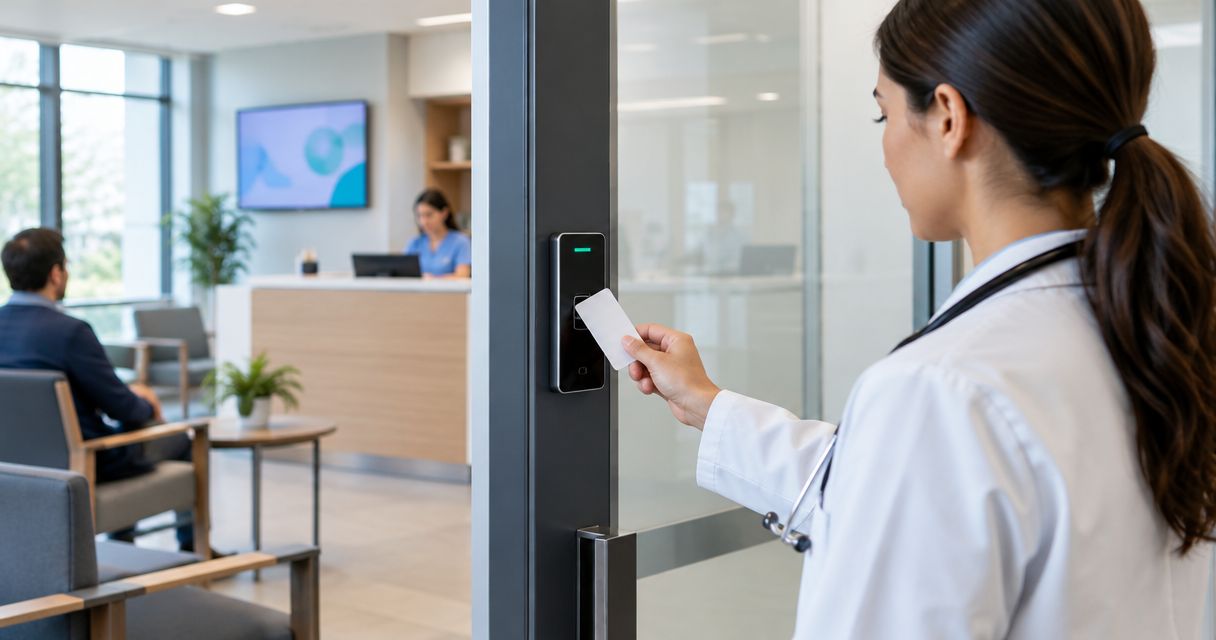
An apartment building has different security jobs at different doors. A resident’s front door needs controlled access and dependable locking; a shared entrance also needs a way to admit residents, visitors, and authorized workers without compromising exit.
Omegalocksmith’s locksmith services cover residential locks, commercial doors, and access control. For your 2026 upgrade, specify the door’s job before choosing the lock. A stronger cylinder does not correct a loose frame, and an electronic credential does not make a door close properly.
What makes the best apartment-building security lock?
Judge each proposed setup against these criteria before comparing features:
- Controlled duplication: Establish who can authorize additional keys and what documentation the supplier requires. A restricted keyway and a high-security cylinder are not automatically the same thing.
- Documented resistance: Ask for the exact cylinder model and applicable certification. UL 437 addresses key locks; ANSI/BHMA A156.30 addresses high-security cylinders. Check the listed product, not just the manufacturer’s name.
- Door compatibility: Match the lock to the door preparation, thickness, frame, handing, and existing hardware. Identify labeled fire-door assemblies before changing components.
- Safe exit: Preserve the required exit operation. Entry security must not trap occupants or interfere with required egress hardware.
- Access administration: Decide how residents, maintenance staff, contractors, and emergency responders receive access. Include lost keys, revoked credentials, and tenant turnover.
- Maintenance responsibility: Identify who handles mechanical wear, batteries, wiring, controller faults, and credential changes. Choose a system your building can actually manage.
Apartment-building locks at a glance
These are hardware configurations, not interchangeable products. The ranking favors a clear fit for each opening rather than claiming one lock works throughout every building.
| Rank and configuration | Best for | Standout feature | Key limitation |
|---|---|---|---|
| 1. Restricted-keyway mortise lock | Compatible apartment entry doors | Lock functions integrated into a mortise case, with controlled key duplication | Requires matching door preparation and function |
| 2. Restricted-keyway deadbolt | Unit doors already prepared for a separate deadbolt | Focused cylinder and deadbolt upgrade | Does not repair a weak frame or manage shared access |
| 3. Credential-controlled electric strike | Shared entrances with centrally managed access | Changes entry authorization without replacing every resident’s key | Depends on compatible latching hardware, wiring, and controls |
| 4. Credential-operated unit lock | Rentals needing individual credential changes | Electronic authorization at the apartment door | Battery or power maintenance and administrative controls need attention |
| 5. Exit device with restricted-key exterior trim | Doors that require exit-device hardware | Exterior key control while retaining the specified exit function | Must match the door’s egress and fire-rating requirements |
1. Restricted-keyway mortise lock: best for apartment entry doors
A mortise lock uses a case fitted into a pocket in the door. For an apartment entry already prepared for that hardware, a compatible mortise lock with a restricted-keyway cylinder combines mechanical operation with a defined process for obtaining additional keys.
Best for: Apartment entry doors with suitable mortise preparation, where the priority is mechanical locking and controlled key duplication.
Restricted-keyway mortise lock pros:
- Can retain the door’s existing mortise format when dimensions and functions match.
- Supports a documented process for authorizing additional keys.
- Keeps everyday locking independent of an electronic credential platform.
Restricted-keyway mortise lock cons:
- Mortise cases, functions, and trim are not universally interchangeable.
- Key restrictions alone do not establish resistance to picking, drilling, or forced entry.
- A lost authorized key still requires an access decision, such as rekeying.
For your 2026 specification, separate the lock case from the cylinder. Ask which component provides the claimed security and whether the proposed combination suits the existing door assembly. Also confirm how residents lock the door and exit from inside.
Verdict: Buy for compatible apartment entry doors when mechanical security and key control are the priorities.
2. Restricted-keyway deadbolt: best for existing deadbolt doors
A restricted-keyway deadbolt suits an apartment door already configured for a separate deadbolt and operating handle. It is a targeted upgrade when you want to improve key administration without changing to a different lock format.
Best for: Unit doors with suitable deadbolt preparation and a serviceable door, strike, and frame.
Restricted-keyway deadbolt pros:
- Keeps the security upgrade focused on the existing deadbolt location.
- Allows a controlled process for issuing replacement and additional keys.
- Does not depend on software for ordinary key operation.
Restricted-keyway deadbolt cons:
- The surrounding door and frame remain part of the security system.
- Separate locking and latching hardware require a review of exit operation.
- Physical keys cannot be individually disabled through an access-control dashboard.
Ask the installer to inspect strike attachment, bolt alignment, and whether the bolt extends fully without forcing the door. Do not choose a keyed interior cylinder simply because it sounds more secure; the interior operation must suit the opening’s requirements.
Verdict: Buy for a suitable existing deadbolt opening; skip a cylinder-only upgrade when the frame or door needs repair.
3. Electric strike: best for a managed shared entrance
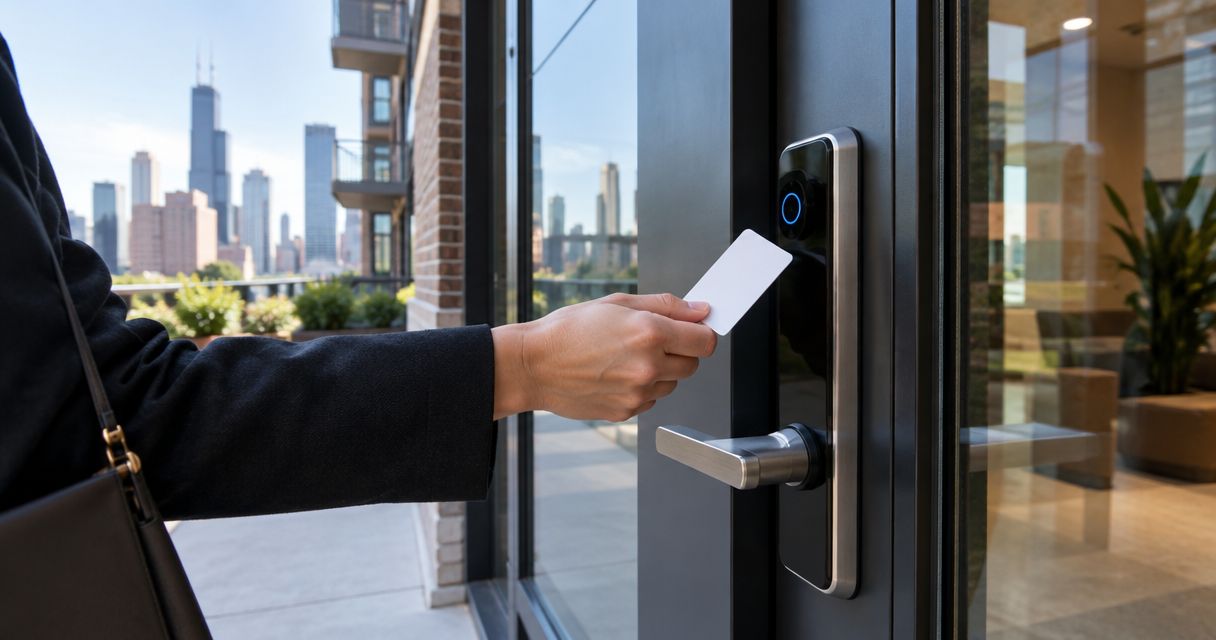
An electric strike releases compatible door-latching hardware after an access-control system authorizes entry. Pairing the arrangement with an appropriate restricted-key mechanical override gives the building a separate way to control physical keys.
Best for: Shared building entrances where management needs to issue and revoke individual entry credentials.
Credential-controlled electric strike pros:
- Supports credential changes without collecting every resident’s physical key.
- Can work with compatible existing mechanical latching hardware.
- Separates electronic entry authorization from the interior exit operation when correctly designed.
Credential-controlled electric strike cons:
- Requires coordinated selection of the strike, latch, power supply, and controller.
- Does not stop someone from following an authorized resident through the door.
- A door that fails to close and latch remains unsecured regardless of credential settings.
For a 2026 shared-entry project, ask what happens during loss of power and failure of the access controller. Fail-safe and fail-secure describe different power-loss behavior; neither label alone establishes whether the complete opening meets its requirements.
Verdict: Buy for managed shared entry after the installer confirms latching, power-loss behavior, and safe exit.
4. Credential-operated unit lock: best for individual access changes
A credential-operated unit lock grants entry using an electronic authorization method, such as a code or credential. Depending on the selected system, management can change access without physically exchanging a conventional resident key.
Best for: Rental operations that need a repeatable process for changing individual apartment access.
Credential-operated unit lock pros:
- Supports a defined process for adding and removing authorized users.
- Reduces reliance on collecting conventional keys at turnover.
- Can separate resident access from temporary contractor access when the chosen system supports it.
Credential-operated unit lock cons:
- Electronic access does not establish the lock’s mechanical attack resistance.
- Batteries or a wired power source introduce maintenance tasks.
- Management accounts and permissions become part of building security.
Before choosing a system, confirm whether credential changes require a visit to the door, a local connection, or a network connection. Ask how residents enter after a battery failure and how management removes a former employee’s administrative access.
Verdict: Buy when individual access changes justify the added administration; skip when nobody will maintain the system.
5. Exit-device trim: best for doors requiring exit hardware
An exit device allows the specified interior release operation, while exterior trim determines how authorized users enter. Where the opening requires this hardware, a compatible restricted-key cylinder can improve control over exterior keys without substituting an ordinary apartment deadbolt.
Best for: Shared or service doors whose approved design requires an exit device.
Exit device with restricted-key exterior trim pros:
- Retains the specified exit-device function while addressing exterior access.
- Allows controlled authorization of additional exterior keys.
- Can separate the choice of exterior entry function from interior release operation.
Exit device with restricted-key exterior trim cons:
- Trim, cylinder, device, and door compatibility must be confirmed together.
- Fire-rated openings place additional constraints on hardware changes.
- Key control does not prevent propping or unauthorized entry behind another person.
Do not replace an exit device with a deadbolt to make the door appear harder to open. Have the installer identify the required function and any listing constraints before proposing replacement parts.
Verdict: Buy when the opening requires exit-device hardware; skip any retrofit that compromises its exit function.
Check the opening before ordering hardware
Use 3 door groups for your building survey: unit entries, shared entries, and service doors. Record the existing hardware and the access problem separately for each opening; do not assume every door in a group has identical requirements.
- Unit entries: Record the lock format, interior operation, door condition, and tenant-turnover process.
- Shared entries: Check closing, latching, visitor entry, credential administration, and power-loss operation.
- Service doors: Identify authorized users, required exit hardware, and any tendency to leave the door propped open.
For your 2026 handover, create 2 permission lists: people authorized to enter and people authorized to approve keys or change credentials. These are different responsibilities. A contractor who needs temporary entry does not necessarily need permission to create more keys.
Where individual electronic credentials are used, assign 1 credential per resident rather than one shared building credential. That recommendation preserves individual revocation; it does not prevent credential sharing or someone holding the door open.
Ask for the exact hardware specification, key-authorization procedure, and maintenance instructions before approving the installation. Keep those records available to the next property manager.
Plan Your Building Lock Upgrade
Discuss apartment locks, commercial doors, and access control for your Chicago-area property.
How the options rank
This 2026 ranking prioritizes door compatibility, controlled duplication, documented security, safe exit, and manageable access administration. It is a selection guide by opening type, not a product test or a claim that every lock in a category meets a high-security standard.
Ask for the exact model and its documentation. A category name, keypad, or restricted key blank cannot substitute for evidence about the specified hardware.
Which apartment-building lock should you choose?
Choose a restricted-keyway mortise lock as the default for a compatible mechanical apartment entry. Keep a suitable deadbolt format when that is what the unit door already supports. Choose a credential-controlled electric strike for shared-entry authorization, not as a substitute for repairing the closer or latch.
Omegalocksmith is a fit for Chicago-area property managers seeking apartment-building lock and access-control services. Its stated service area includes Chicago and surrounding Cook and DuPage counties. Start with an opening-by-opening assessment rather than a request to install the same lock everywhere.
FAQ
What are the best high security locks for apartment building doors?
The best configuration depends on the opening: a restricted-keyway mortise lock suits a compatible unit entry, while a credential-controlled electric strike suits managed shared entry. Confirm the exact hardware’s certification, door compatibility, and exit function before selecting it.
Is a restricted-keyway lock automatically a high-security lock?
No. A restricted keyway controls access to additional keys, but that alone does not establish resistance to picking, drilling, or other attacks. Ask for documentation covering the exact cylinder model.
Should every apartment building use electronic locks?
No. Electronic locks are useful when individual access changes solve a management problem, but they introduce power and administrative responsibilities. Mechanical restricted-key systems remain an option where physical-key control meets the building’s needs.
Can a stronger cylinder fix a weak apartment door?
No. A stronger cylinder does not repair a damaged frame, loose strike, misaligned bolt, or door that fails to latch. Inspect the complete opening before deciding which hardware to replace.
Can residents still exit when an electric strike loses power?
Exit behavior depends on the complete hardware arrangement, not the strike’s name alone. Have the installer explain interior release and power-loss behavior for the proposed opening and confirm applicable requirements.
Should an apartment building have a master-key system?
Use a master-key system only when its access hierarchy serves a defined operational need. Document who holds each key and how a lost master key will be handled, because its access extends beyond a single lock.
Who provides apartment-building locksmith services around Chicago?
Omegalocksmith provides residential lock, commercial door, and access-control services in Chicago and surrounding Cook and DuPage counties. Describe the affected doors and access problem when requesting an assessment.
One last thing
Test the door’s closing and latching before debating cylinder features. Release it from normal use and check that it closes and secures without someone pulling it shut. Report any failure for adjustment; a high-security cylinder cannot protect an opening whose latch never engages.