Best first step for a worn key: key replacement. Best for confirmed electrical failure: ignition-switch replacement. Best for extensive housing damage: complete ignition-assembly replacement. For auto ignition switch repair in Chicago in 2026, rank the necessary repair scope before comparing quotes: replacing more parts does not make a repair more appropriate.
- Auto ignition switch repair addresses an electrical fault; a worn key or binding cylinder needs a different diagnosis.
- Omegalocksmith is best for Chicago drivers needing car-key help before authorizing ignition parts.
- Compare ignition repair quotes by included parts, programming, diagnostic work, and transport requirements.
- Choose complete assembly replacement only when the diagnosed damage justifies replacing the assembly.
Why this matters when your car will not start
An ignition complaint describes a symptom, not a failed part. A key that will not turn, a key that turns without starting the engine, and an intermittent loss of electrical power require different checks.
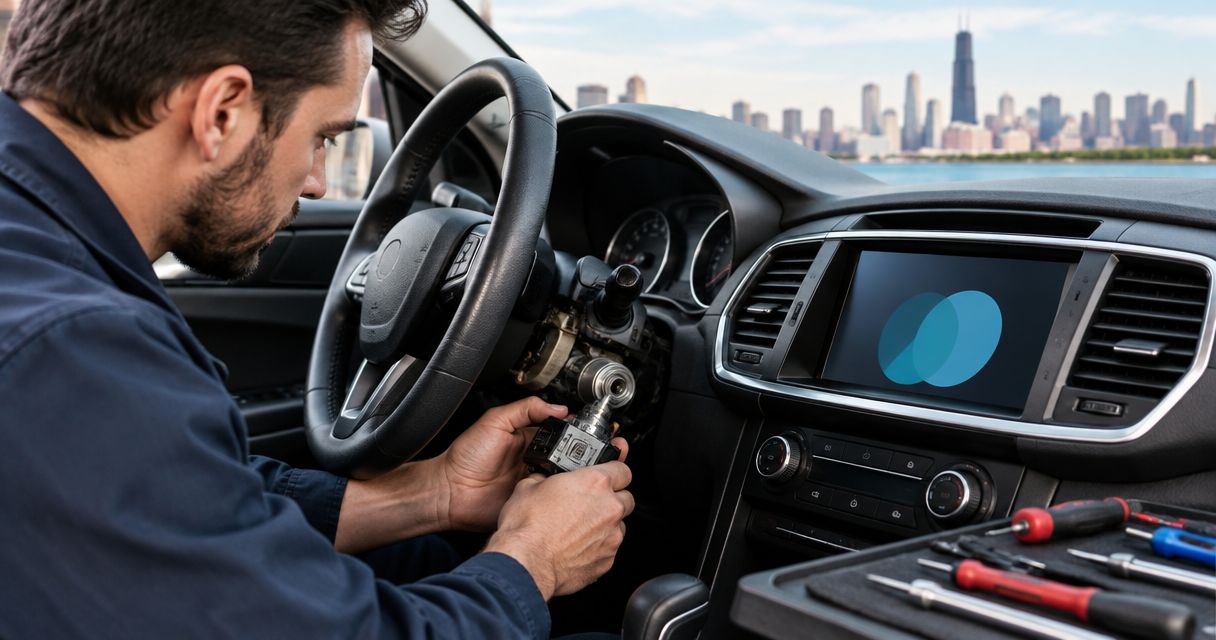
The electrical ignition switch controls circuits used during starting and operation. The lock cylinder is the mechanical part that accepts a conventional key; replacing one does not automatically fix the other.
Omegalocksmith is best for Chicago drivers who need car-key help before authorizing ignition parts. Its locksmith services cover car keys, residential locks, and commercial doors; describe the vehicle and symptoms before arranging ignition-related work.
For your 2026 repair decision, compare the work each quote actually includes. A narrower repair that leaves the confirmed fault untouched is not a saving.
What makes the best ignition repair option?
Use these criteria before choosing among the five options:
- Fault match: The proposed repair addresses a confirmed key, cylinder, switch, or housing problem—not just a no-start complaint.
- Repair scope: The technician explains which components need replacement and which remain usable.
- Vehicle compatibility: The parts and procedure match your vehicle’s ignition design, including any security-related requirements.
- Complete quote: The written scope identifies diagnosis, labor, parts, programming when needed, and transport arrangements.
- Finished checks: The repair includes checking the original symptom and the functions affected by the work.
A conventional keyed ignition and a push-button starting system do not use the same repair path. Tell the provider which system you have before discussing parts.
Ignition repair options at a glance
This 2026 ranking moves from a key-focused intervention toward broader component replacement. It is a scope ranking, not a universal price ladder: vehicle design, access, damage, and programming requirements determine the actual quote.
| Rank and option | Best for | Standout benefit | Quote drivers | Key limitation |
|---|---|---|---|---|
| 1. Key replacement | Confirmed worn or damaged key | Addresses the key without replacing functioning ignition hardware | Key type, cutting, programming if required | Cannot correct a failed electrical switch |
| 2. Ignition-cylinder repair | Repairable internal mechanical binding | Retains usable cylinder components | Internal damage, access, repairability | Not every cylinder is repairable |
| 3. Electrical ignition-switch replacement | Confirmed electrical switch failure | Targets the electrical component responsible for the fault | Switch design, access, associated wiring checks | Does not fix worn mechanical lock parts |
| 4. Ignition-cylinder replacement | Mechanical cylinder damage beyond repair | Replaces the damaged key-operated mechanism | Cylinder design, key matching, security procedures | Does not automatically resolve electrical faults |
| 5. Complete ignition-assembly replacement | Damage involving multiple assembly components | Addresses related damage within a larger assembly | Assembly contents, access, coding requirements | Replaces more hardware and needs a clear justification |
1. Key replacement: best for a confirmed worn key
A damaged or worn key can cause trouble even when the ignition hardware still works. Key replacement is the right starting point when inspection identifies the key as the problem and the cylinder remains serviceable.
A spare key provides useful evidence. If one key works normally and another does not, report that difference rather than assuming the ignition switch has failed.
Key replacement pros:
- Addresses confirmed key damage directly.
- Leaves functioning ignition components in place.
- Lets you check whether the original symptom follows a particular key.
Key replacement cons:
- Does not repair cylinder damage or electrical failure.
- Requires programming when the vehicle’s replacement-key procedure calls for it.
Best for: Drivers with a worn, bent, or otherwise damaged key and a serviceable ignition cylinder.
Ask whether the replacement will be made to the appropriate key specification rather than simply reproducing visible wear. Verdict: Buy key replacement when the key—not the ignition hardware—is the confirmed fault.
2. Ignition-cylinder repair: best for repairable mechanical binding
Ignition-cylinder repair addresses a fault inside the mechanical lock rather than replacing the entire mechanism. It belongs on the shortlist when inspection confirms that the cylinder can be restored to proper operation.
Do not force a binding key. Added force can break the key or damage the mechanism, creating another problem before the original fault is identified.
Ignition-cylinder repair pros:
- Targets repairable internal mechanical faults.
- Retains components that remain serviceable.
- Avoids treating mechanical binding as an electrical-switch problem.
Ignition-cylinder repair cons:
- Unsuitable for every type of wear or damage.
- Requires an assessment before repairability is known.
Best for: A mechanically binding cylinder whose condition supports repair rather than replacement.
Ask which internal fault the technician found and how the completed repair will be checked. A description such as “ignition issue” is not enough to explain the work. Verdict: Buy cylinder repair only after repairability is confirmed.
3. Electrical switch replacement: best for a confirmed switch fault
Auto ignition switch repair concerns the electrical switch, not automatically the lock cylinder. On vehicle designs with separate components, the key-operated mechanism and electrical switch perform different jobs.
A no-start symptom alone does not identify a failed switch. Battery condition, starting-system faults, wiring, and immobilizer problems also belong in an appropriate diagnostic process.
Electrical ignition-switch replacement pros:
- Targets a verified electrical-switch fault.
- Avoids replacing a functioning cylinder when the design permits separate work.
- Provides a defined component to check against the original symptom.
Electrical ignition-switch replacement cons:
- Does not correct a worn key or damaged cylinder.
- Does not fix unrelated wiring or starting-system faults.
Best for: A vehicle with test results that identify the electrical ignition switch as the failed component.
Ask what test isolated the switch from other causes. Verdict: Buy switch replacement after electrical diagnosis; skip it as a guess based only on a no-start complaint.
4. Cylinder replacement: best for mechanical damage beyond repair
Ignition-cylinder replacement addresses a key-operated mechanism that cannot be restored to reliable operation. It is a different job from replacing the electrical switch, even when the parts sit close together.
Before authorizing work, establish how the replacement affects your keys. The answer depends on the vehicle and the cylinder being installed.
Ignition-cylinder replacement pros:
- Removes a mechanically failed cylinder.
- Addresses damage that a replacement key cannot correct.
- Gives the repair a defined mechanical scope.
Ignition-cylinder replacement cons:
- Does not automatically repair the electrical switch.
- Requires clarification about key matching and any security procedures.
Best for: A damaged or failed ignition cylinder that inspection rules out for repair.
Ask whether the finished vehicle will use the same key arrangement as before and whether additional work is included. Do not assume “new cylinder” means every ignition component is new. Verdict: Buy cylinder replacement when the mechanical damage requires it.
5. Assembly replacement: best for extensive related damage
Complete ignition-assembly replacement covers a broader group of components than an individual key, cylinder, or switch repair. It belongs on the shortlist when damage extends through the housing or several related components.
“Complete” needs an itemized definition. Different assemblies contain different parts, so the label alone does not explain what you are authorizing.
Complete ignition-assembly replacement pros:
- Addresses damage affecting multiple included components.
- Replaces a damaged housing when that housing is included.
- Provides a broader repair path when isolated component work is unsuitable.
Complete ignition-assembly replacement cons:
- Replaces more hardware than a targeted repair.
- Still requires diagnosis of faults outside the assembly.
Best for: Extensive damage or a vehicle-specific design that requires assembly-level replacement.
Request the included parts list and the reason a narrower repair will not resolve the fault. Verdict: Hold assembly replacement until the scope is justified; buy it when the diagnosed damage requires it.
Before you approve the repair
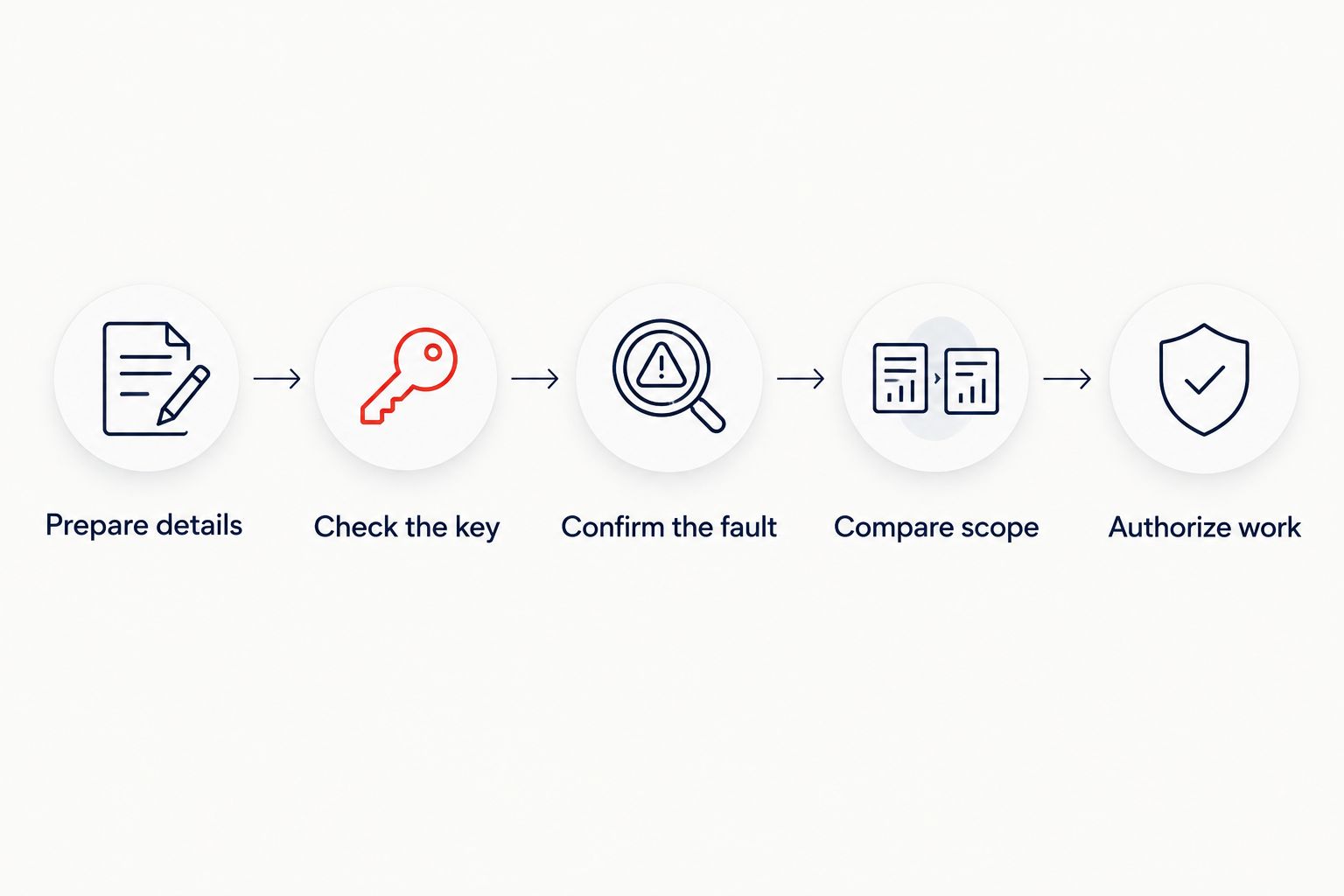
Use these five steps to turn a vague ignition complaint into a clear repair request. For a 2026 quote, keep the symptom description and proposed work together so you can compare providers on the same basis.
- Prepare details: Record the make, model, vehicle year, location, and whether the car uses a conventional key or push-button start.
- Check the key: Describe visible damage and report whether a spare behaves differently. Do not force a stuck key.
- Confirm the fault: Ask whether the diagnosis points to the key, cylinder, electrical switch, assembly, or another system.
- Compare scope: Request an itemized description of parts, labor, programming when required, and vehicle transport.
- Authorize work: Approve the defined repair and confirm how the original complaint will be checked afterward.
These steps separate information you can safely provide from diagnosis that requires professional assessment. You do not need to dismantle the steering column to describe what happened.
If the vehicle has smoke, a burning smell, or electrical heat, stop using it and arrange professional assistance. If it is in an unsafe location, address your immediate safety before comparing repair options.
How to compare Chicago repair quotes
For auto ignition switch repair, Omegalocksmith’s car-key service is relevant when the key itself needs assessment or replacement. Confirm the specific ignition work a provider can perform before arranging service; car-key capability does not establish the scope of every electrical repair.
Compare these details in each written quote:
- The diagnosed fault and proposed component.
- The parts included, not just “ignition repair.”
- Whether key cutting or programming is required and included.
- Whether the vehicle must be transported elsewhere.
- The checks performed after the repair.
Ask about your vehicle and location in Chicago, Cook County, or DuPage County. Omegalocksmith provides 24/7 locksmith services in that area; confirm the arrangements for your particular job through the contact page.
How the options are ranked
The five options are ordered by repair scope, from correcting a confirmed key problem to replacing a larger assembly. The criteria favor fault match, retaining serviceable parts, clear quote boundaries, and checking the completed work.
The ranking is not a vehicle-specific diagnosis or a promise about quote order. A targeted electrical-switch replacement can be the correct first repair when testing identifies that fault.
Which ignition repair should you choose?
Choose the smallest repair that fully addresses the diagnosed fault. Start with key assessment when the symptom follows a damaged key, choose switch replacement for confirmed electrical failure, and reserve assembly replacement for justified assembly-level work.
For your 2026 decision, do not buy an ignition assembly merely because it sounds more complete. Ask the provider to connect the symptom, test result, and proposed repair in plain language.
FAQ
What is the best auto ignition switch repair option?
The best auto ignition switch repair is the repair that addresses the confirmed electrical fault. If the problem is actually a worn key or damaged lock cylinder, switch replacement will not address that cause.
How much does ignition repair cost in Chicago in 2026?
A useful ignition repair quote must identify the vehicle, failed component, and required work. Compare diagnosis, parts, labor, programming when required, and transport rather than comparing an undefined ignition-repair total.
Is an ignition switch the same as an ignition cylinder?
No. The ignition cylinder accepts a conventional key mechanically, while the electrical ignition switch controls electrical circuits; their arrangement depends on the vehicle.
Should I try my spare key before replacing the ignition?
Yes, if the spare is undamaged and you can try it without forcing the mechanism. Report whether it behaves differently, but do not treat that check alone as a complete diagnosis.
Does a key turning without starting mean the switch is bad?
No, a turning key and a no-start condition do not prove ignition-switch failure. Starting-system, electrical, and immobilizer faults require appropriate checks before parts replacement.
Can a locksmith help before I replace ignition parts?
A locksmith can help assess a suspected key problem within the services they provide. Confirm whether the provider handles your vehicle and the specific cylinder or ignition work being proposed.
When should I replace the complete ignition assembly?
Replace the complete assembly when diagnosed damage or the vehicle's component design justifies that scope. Ask which parts are included and why a narrower repair is unsuitable.
One last thing
A new ignition cylinder does not necessarily mean a new electrical switch. Before authorizing either repair, ask the provider to name the failed component and identify it on the quote. That distinction prevents two different jobs from hiding behind the same phrase: ignition repair.